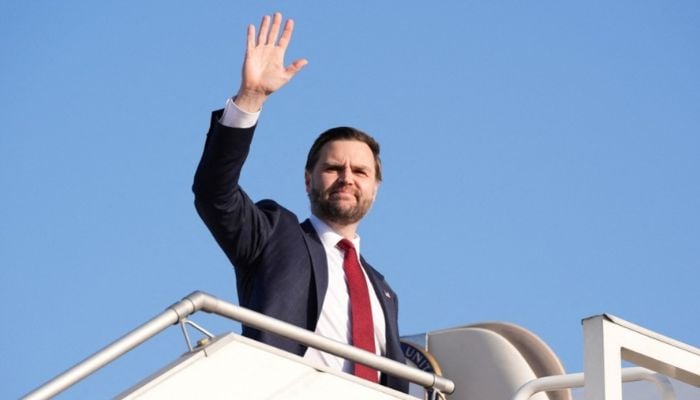
U.S. Vice President JD Vance announced on Sunday, April 12, that his negotiating team was leaving Pakistan after not reaching a deal with Iran following 21 hours of negotiations, jeopardizing a fragile two-week ceasefire.
While concluding the 'Peace Talk' negotiations for 'ceasefire,' Vance expressed shortcomings of the deal offer and said that Iran chose not to accept American terms for a deal, including 'not to build nuclear weapons.'
On the contrary, the Iranian foreign ministry had warned earlier that the success of this weekend’s talks depended on Washington avoiding “excessive demands” and “unlawful requests."
Among issues discussed were the strategic strait of Hormuz, nuclear development, war reparations, and sanctions.
"The bad news is that we have not reached an agreement, and I think that's bad news for Iran much more than it's bad news for the United States of America," Vance told reporters after the talks ended.
"So we go back to the United States having not come to an agreement. We've made very clear what our red lines are, he added.
"We need to see an affirmative commitment that they will not seek a nuclear weapon, and they will not seek the tools that would enable them to quickly achieve a nuclear weapon. That is the core goal of the president of the United States, and that's what we've tried to achieve through these negotiations."
Iran's semi-official Tasnim news agency said that "excessive" U.S. demands had hindered reaching an agreement and that negotiations had ended. Before Vance spoke, Iran's government in a post on X had said negotiations would continue and technical experts from both sides would exchange documents.
Notably, the talks in Islamabad were the first direct U.S.-Iranian meeting in more than a decade and the highest-level discussions since the 1979 Islamic Revolution.
Vance's delegation included special envoy Steve Witkoff and President Donald Trump's son-in-law Jared Kushner. Vance said he talked with Trump a half a dozen to a dozen times during the talks.
While Iran's team included Parliamentary Speaker Mohammad Baqer Qalibaf and Foreign Minister Abbas Araqchi.
The Iranian delegation arrived on Friday dressed in black in mourning for late Supreme Leader Ayatollah Ali Khamenei and others killed in the war.
Moreover, they carried shoes and bags of some students killed during the U.S. bombing of a school next to a military compound, the Iranian government said.
The Pentagon has said the strike is under investigation, but multiple reports cited that military investigators believe the U.S. was likely responsible for it.
Reflecting upon the neogiations between US-Iran "peace talks," Pakistan expressed that "There were mood swings from the two sides, and the temperature went up and down during the meeting."
Pakistan made 'History' for holding US-Iran 'Peace Talks'
The talks in Pakistan's capital were aimed at securing a peace agreement to end the weeks-long war.
For the U.S.-Iran talks, Islamabad, a city of more than 2 million people, was locked down with thousands of paramilitary personnel and army troops on the streets.
Pakistan's mediating role is a remarkable transformation for a nation that was a diplomatic outcast a year ago.
While leaving from Islamabad, Pakistan, after his brief press conference, U.S. Vice President JD Vance thanked Pakistan's continuous efforts as a mediator between US-Iran negotiations for the couple of weeks and expressed gratitude, marking history for holding 'peace talks' to end war positively as a broker after global tensions escalated between two nations.