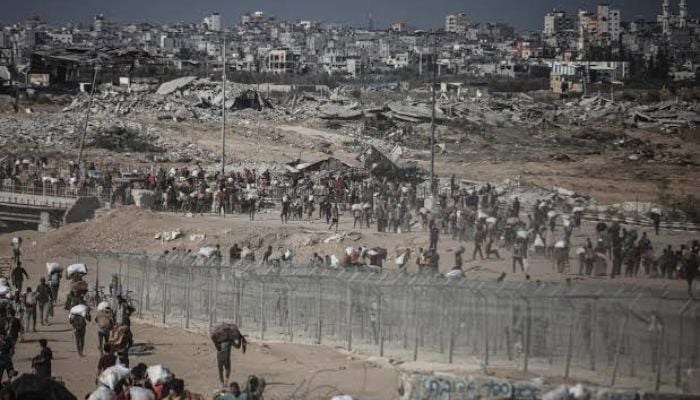
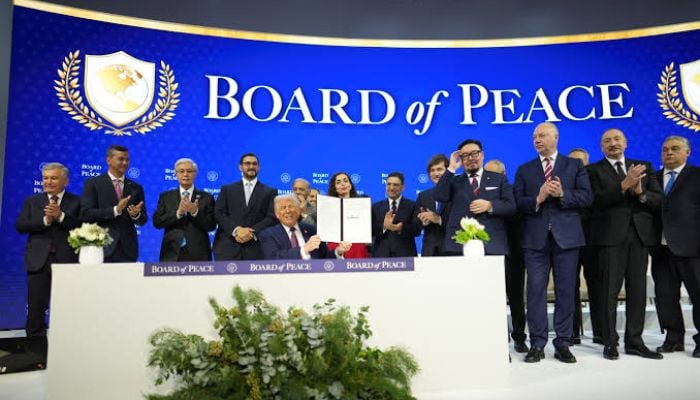
The Board of Peace (BoP), led by U.S. President Donald Trump, has significantly scaled back its ambitious Gaza reconstruction blueprint. Originally designed as a comprehensive territory-wide recovery plan, the initiative is now being narrowed down to a tiny pilot project in the south of the Gaza Strip.
The pilot plan
The proposed project involves setting up a camp with portable cabins in a buffer zone near Rafah, aimed at housing tens of thousands of displaced Palestinians. A board official described it as a “starting point” to help the National Committee for the Administration of Gaza (NCAG) establish governance.
The area would be secured by the International Stabilization Force (ISF) and a vetted Palestinian police force with the goal of separating civilians from military zones.
Concerns and criticism
The project has faced significant backlash. Critics, including former Israeli Prime Minister Ehud Olmert, have labeled the proposed camp a “concentration camp” in the making.
Humanitarian workers and diplomats have also warned that grouping civilians into restricted, controlled zones may violate international humanitarian law and hinder freedom of movement.
Funding and future
The board is currently struggling to secure funds as little of the originally pledged $17 billion has materialized.
Negotiations are underway to potentially use $11 billion in Palestinian tax revenue held by Israel, a move that the Palestinian Authority has denounced, with Foreign Minister Varsen Aghabekian stating, “These are not Israeli funds to withhold or bargain with. These funds must be released immediately and unconditionally.”
The board maintains that the pilot is a necessary practical step, noting that “ultimately our assessment will be guided by actions, not promises, to meet the critical needs of the people of Gaza.”