_updates.jpg)
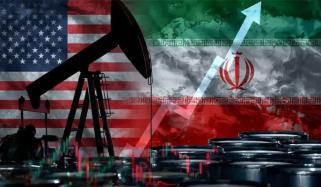
With all eyes on Pakistan for the US-Iran talks, President Trump has issued another firm statement to Tehran, as the blocking of the Strait of Hormuz continues to disturb global energy supplies.
Speaking to reporters on Friday, April 10, ahead of peace talks in Islamabad, Trump claimed that the Strait of Hormuz will reopen "fairly soon" with or without Iran's assistance.
"I would say this: We will have that open fairly soon," he said.
Trump also said he would not accept Iran's imposition of a de facto toll booth system in the strait.
Tehran has indicated plans to charge vessels fees for safe passage even if the deal is reached with the US to end the war.
"If they are doing that, we're not going to let that happen," Trump told reporters before boarding Air Force One at Joint Base Andrews in Camp Springs, Maryland.
The president also said the key point of the agreement could be to ensure that Iran does not possess nuclear weapons, which would "automatically" open up the waterway.
"No nuclear weapons, that’s 99 per cent of it," Trump added.
Despite the announcement of a two-week ceasefire between the US and Iran on Tuesday, the strait remains closed in response to Israel's disturbing attack on Lebanon.
Only two vessels passed through the strait on Friday, down from five the previous day, according to S&P Global Market Intelligence.
Since the start of the ceasefire, just 22 ships with their automatic identification system turned on have exited the strait, according to the market intelligence provider, compared with about 135 daily transits before the war.
As per Lloyd's List Intelligence, more than 600 vessels, including 325 tankers, are still stranded in the Gulf due to the blockage of the strait.
US Vice President JD Vance and Iranian parliamentary speaker Mohammad Bagher Ghalibaf are set to lead negotiations in Islamabad on Saturday, aimed at securing a permanent end to the war.