China is rapidly closing the technological gap with Silicon Valley, positioning itself as a leader in the global artificial intelligence race. By prioritizing open-source and “open-weight” models, Chinese developers are offering powerful alternatives to the restrictive, high-priced systems maintained by US giants like OpenAI and Anthropic.
A narrowing gap
Recent data shows that the performance gap between Chinese models and top-tier US frontier models has shrunk to as little as four months. For example, the newly released Kimi K3 model from Moonshot AI has benchmarked results that rival Anthropic’s Claude and OpenAI’s GPT platforms.
Industry experts note that “the gap between Chinese open-weight models and the latest US frontier models is narrowing faster than previously understood.”
The power of affordable innovation
Chinese companies are using aggressive pricing and open access as a “strategic weapon.” By allowing developers to download and modify model parameters, they offer significantly lower costs – sometimes slashing enterprise expenses by up to 90% compared to Western proprietary services. This approach has gained traction with international companies looking for efficiency.
Architects of a new order
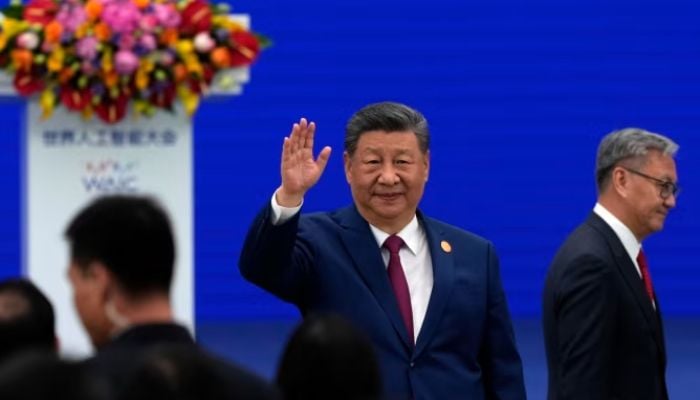
At the World Artificial Intelligence Conference, President Xi Jinping outlined a vision where China acts as an architect for a new global AI order. Xi emphasized that AI “should not be dominated by any single nation.”
By sharing research and technology across the Global South, Beijing aims to build an alternative ecosystem that reduces reliance on US-controlled technology.
Risk and future outlook
While this openness fosters rapid innovation, it also creates security concerns. Unlike closed US systems, these open models lack centralized safeguards to “detect and disrupt misuse.”
As the competition heats up, the world is increasingly choosing between competing technological frameworks, balancing the benefits of low-cost access against the complexities of global AI governance.