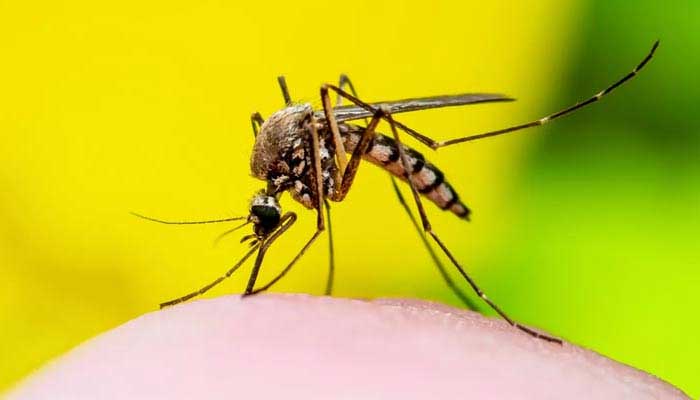
The Toronto Public Health has officially announced that a batch of mosquitoes in Toronto has tested positive for the West Nile virus, just a few days after mosquitoes in York and Halton regions also tested positive.
On Friday, the public health unit stated the batch is the first in Toronto to test positive for the virus this year.
How does West Nile virus spread?
West Nile virus rapidly spreads to individuals through mosquito bites, which can lead to severe complications.
Every year, Toronto Public Health conducts mosquito surveillance from mid-June until mid-September.
Once a week, 22 traps are set across the city to collect mosquitoes. The mosquitoes are then submitted to a laboratory for identification and testing.
The news follows public health units in York and Halton regions confirming that some mosquitos in their areas tested positive for the virus. The findings mark the first positive cases for both regions this summer.
York Region confirmed the positive test Thursday, while Halton Region confirmed the positive test July 2.
In York Region, the positive tests were found in two mosquito traps in Markham.
As per Halton Region, mosquitoes with the virus are more common in urban areas.
The region stated that many people who contracted the infection are asymptomatic, but some may develop fever, headache, body aches, nausea and rashes.
While the majority of people "recover completely," the region said some go on to develop severe illnesses affecting the central nervous system.
People over the age of 50 or immunosuppressed individuals are at a greater risk for severe disease.
Residents in Toronto, York Region and Halton Region are strongly advised to follow these precautions:
- Wear long, light-coloured clothing.
- Cover up between dawn and dusk when mosquitoes are most active.
- Use insect repellent with DEET or Icaridin.
- Eliminate pools of water on your property, such as in planters, pool covers and waste containers.
- Ensure window and door screens are tight-fitted.