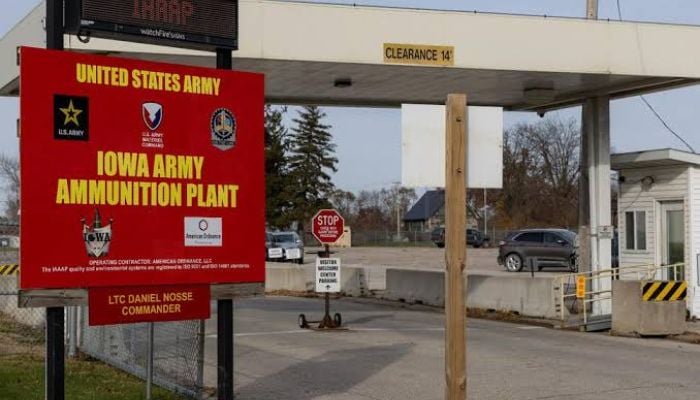
The US Army plans to blow up the nation’s entire stockpile of lead azide at the Iowa Army Ammunition Plant in Middletown.
Following days of legal delays and public pushback, a federal appeals court cleared the military to destroy roughly five tons of the degrading bomb-making chemical before Thanksgiving.
Why the blast is necessary
Officials warn that the 68 barrels of aging lead azide – a sensitive compound once used to trigger explosives – have become dangerously unstable.
Dropping winter temperatures could cause the material to crystallize and explode on its own at any moment. Army leaders stated that a planned, controlled blast is the only safe way to prevent a catastrophic chain-reaction explosion.
Safety measures and public warning
To trap toxic lead dust, crews surrounded the storage bunkers with two-story sand barriers, water walls, and blast-absorbing foam. Weather forecasts show winds blowing southwest toward Missouri, keeping the dust plume away from nearby Burlington.

Still, emergency alerts warned residents within five miles southwest of the plant of possible evacuations. People up to 20 miles away were told to stay indoors, shut all windows and turn off outside air vents.
Legal and political hurdles
The blast was postponed three times after environmental groups sued over air pollution risks and President Donald Trump briefly demanded sign-off from Iowa’s governor-elect.
After a federal court upheld the emergency permit and Governor Kim Reynolds backed the plan, officials confirmed the detonation would move forward.