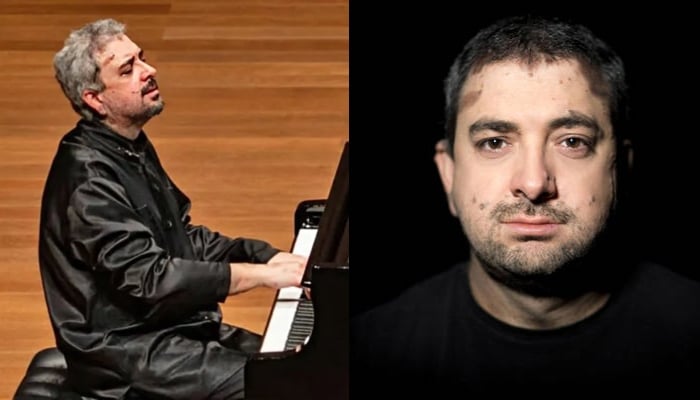
Konstantin Lifschitz tragically died. He was 49.
The classical music world is mourning the loss of an award-winning musician who also earned a Grammy nomination.
On Friday, November 27th, several media reports claimed that Konstantin had breathed his last after prolonged illness.
The deceased singer’s management confirmed his death to the German classical broadcaster BR Klassik, according to SSBCrack and Mogaz, both citing BR Klassik. Neither his management nor his school has given a cause of death or said where he died.
His recording of the celebrated composition also earned him a Grammy nomination in 1996 in the Best Instrumental Soloist Performance (Without Orchestra) category.
Who was Konstantin Lifschitz?
Konstantin was born on December 10th, 1976, in Kharkiv, then part of the Soviet Union and now in Ukraine, and grew up in Moscow, according to Hyperion Records and his faculty profile at the Lucerne University of Applied Sciences and Arts.
He would have turned 50 next month. Obituaries describe him in different ways: Codalario calls him Ukrainian, Pizzicato Ukrainian-Swiss. He became a Swiss citizen and lived near Lucerne.
The late musician started at Moscow’s Gnessin music school at age 5, where his main teacher was Tatiana Zelikman.
He later studied with some of the best-known pianists and scholars of the 20th century, including Alfred Brendel, Leon Fleisher, Rosalyn Tureck and Charles Rosen; Hyperion and Bechstein, the piano maker whose instruments he played, both list him.
Beyond performing, Konstantin Lifschitz was also dedicated to teaching. He joined the faculty of the Lucerne University of Applied Sciences and Arts in Switzerland in 2008, where he taught piano and mentored aspiring musicians.
His death marks the loss of a musician whose career spanned decades and brought his interpretations of some of classical music’s most celebrated compositions to audiences around the world.