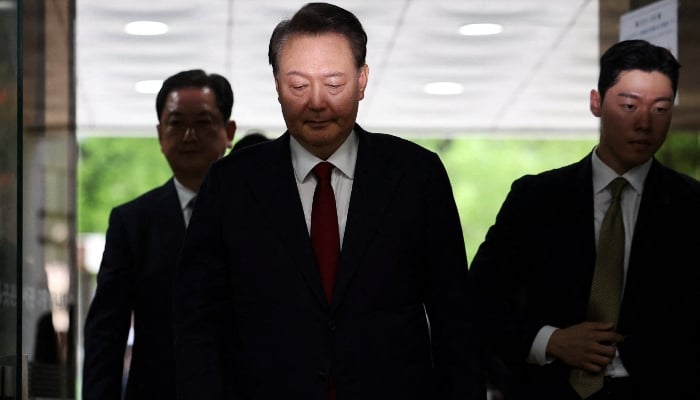
South Korea's impeached president, Yoon Suk-yeol, has been sentenced to a five-year prison term over abuse of power, obstructing justice and falsifying documents in relation to his failed martial law bid in 2024.
On Friday, January 16, the first trial linked to the shocking attempt of martial law took place. The 2024 incident sparked protests as MPs rushed to the National Assembly to overturn Yoon's decision.
Yoon's actions "plunged the country into political crisis", a judge said on Friday, noting that Yoon had "consistently shown no remorse".
The most serious charge against the former president is mutiny, for which prosecutors have demanded the death penalty. The verdict in that trial is expected in February.
On Friday, Yoon was convicted of using presidential bodyguards to prevent his arrest; failing to consult his entire cabinet before declaring martial law; as well as drafting and then destroying a falsified document, which claimed that the martial law bid had been endorsed by the prime minister and defence minister.
"The accused has the duty to safeguard the constitution and law but turned his back on them," the judge noted.
Prosecutors had sought a 10-year jail term for the charges in Friday's ruling and both sides have seven days to appeal.
Yoon denied the charges, arguing that the arrest warrant itself was invalid and that the letter of the law does not require him to consult every member of the cabinet before exercising emergency power.
South Korea's courts often grant leniency when the accused accepts guilt or responsibility. But prosecutors argue that Yoon's lack of remorse is grounds for an even more severe penalty.
Yoon's trials also highlight the division in South Korea, where the former president has a strong support system who see him as a martyr.
According to a survey conducted last December, nearly 30% of South Koreans did not believe that Yoon's martial law declaration amounted to an insurrection.