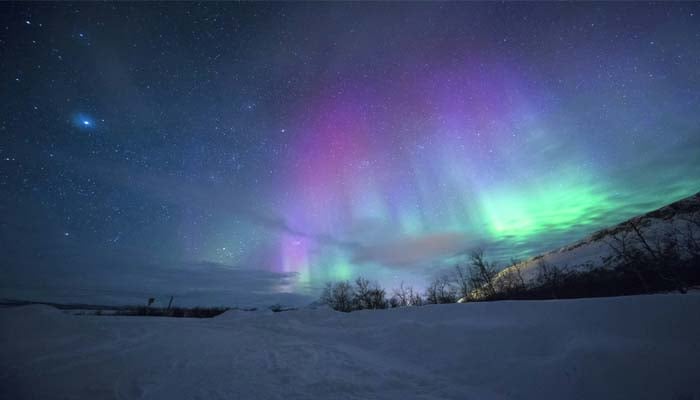
A surge of fast-moving solar wind could trigger geomagnetic storms on April 17–18, potentially pushing the northern lights into mid-latitudes, forecasters say.
The NOAA Space Weather Prediction Center has issued a moderate (G2) geomagnetic storm watch, while the UK Met Office issued a warning regarding stronger (G3) conditions if solar activity intensifies.
If that happens, skygazers will have an awesome opportunity to catch a glimpse of auroras borealis, which could be visible farther south than usual, including parts of the United States such as Illinois and Oregon.
Geomagnetic storms are ranked from G1 (minor) to G5 (extreme). Stronger storms enable auroras to extend beyond polar regions into more populated areas.
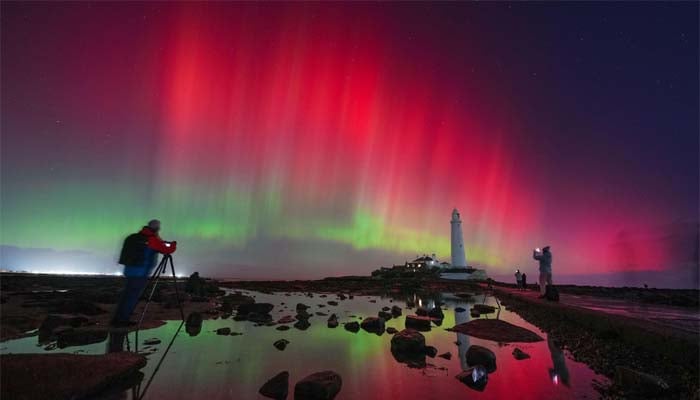
Auroras occur when solar wind interacts with Earth’s magnetic field, sending charged particles into the upper atmosphere. These particles collide with gases like oxygen and nitrogen, releasing energy as colorful light displays.
Visibility will depend on how strongly the solar wind couples with Earth’s magnetic field. Peak activity may occur between late afternoon and early morning hours.
Where to watch Northern lights tonight?
Experts strongly advise viewing from dark locations with a clear northern horizon. Skywatchers may also catch the Lyrid meteor shower, active through April 25, with a peak expected on April 22.