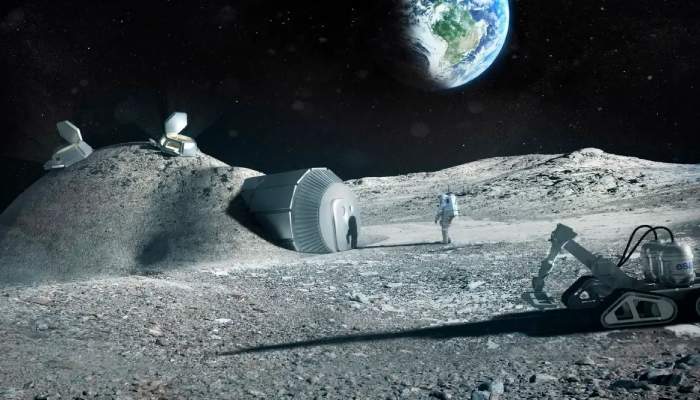
NASA has released details of robotic landers, hopping drones and vehicles as part of US plan for permanent lunar base.
According to NBC News, NASA on Tuesday, May 26, announced plans for three uncrewed missions to the moon later this year that will serve as early steps toward the goal of building a permanent base on the lunar surface.
During these all robotic flights NASA aims to scout locations at the moon’s south pole, gather scientific data, test technologies and prepare for the return of its astronauts to the lunar surface.
NASA Administrator Jared Isaacman said in a news briefing, “We are not jumping right into the glass dome moon base. We intend to take an iterative approach, sending a demand signal to industry for a lot of landers and rovers and tech demonstrations, and all the scientific payloads these missions can accommodate.”
He explained that the newly announced missions, known as Moon Base 1, Moon Base 2 and Moon Base 3, are all slated to launch by the end of this year. The first is scheduled for no earlier than this fall.
Jeff Bezos’ Blue Origin is set to play a major role in that first mission. NASA awarded the company a contract to carry two science and technology payloads to the moon using its lunar lander.
“Moon Base 1 will be the first privately funded lunar lander mission in history,” Isaacman said.
For the Moon Base 2 mission, Isaacman said a lander built by the Pennsylvania-based company Astrobotic will transport more than 1,000 pounds of cargo and a moon rover to the lunar surface.
The Moon Base 3 mission is meant to be primarily scientific, the plan calls for the study of “lunar swirls,” which are unusual formations on the surface of the moon that mysteriously appear brighter than their surroundings.
The mission will also deliver payloads from the European Space Agency and South Korea’s space agency, “demonstrating that the future of lunar exploration is an international effort.”