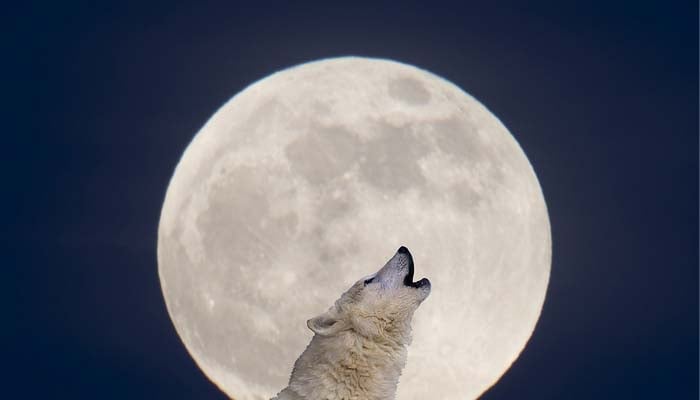
The first Supermoon of 2026 is set to illuminate the skies worldwide tonight, offering an incredible opportunity to witness the stunning celestial phenomenon.
Tonight, January 3, 2026, the Supermoon moon will be the first of this year, rising during the darkest and coldest period of the year, receiving its “Wolf Moon” nickname.
What is a Supermoon?
A Supermoon occurs when the Moon reaches its closest point to Earth in its elliptical orbit, making it appear larger and brighter than a typical full moon.
According to the astronomers, the Wolf Moon gets its name from ancient traditions, especially in North America and Europe, where wolves were heard howling during the winter season at nights.
In some regions, it is also called the Cold Moon, Hard Moon, or Moon After Yule.
The Wolf Moon will be at a distance of 362,312 km from Earth, with 99.8% illumination.
Today's Supermoon is said to be one of the most unique Supermoons because it is both the final one of the previous cycle that started in October 2025 and the first Supermoon of 2026.
The Wolf Moon will peak at 10:03 GMT on January 3, though it will be visible on both the evenings of 2-3 January.
Supermoon timings in Pakistan & South Asia
Moonrise nearly 5:50–6:00 pm (PKT)
Supermoon timings in United Kingdom
The Moon will peak at 10:03 am GMT
Supermoon timings in United States (East Coast)
5:03 am EST
Supermoon timings in Europe (Central)
Around 11:00 am CET
Supermoon timings in Japan
7:03 pm JST
Supermoon timings in Australia (Sydney)
9:03 pm AEDT
How to view it?
Wolf Moon will be visible via naked eye, though binoculars will offer an improved view.
It will offer skywatchers a first celestial highlight of the year.