Euphoria Season 3 has reportedly included the first posthumous appearance of Eric Dane, marking a surprising on-screen moment for fans of the HBO series.
Following a battle with ALS, the Grey’s Anatomy star died in February at 53.
He had already wrapped filming for his part in Euphoria Season 3.
His character, Cal Jacobs, wasn’t in the season premiere, but it included a photo of Dane onscreen with the message, “In remembrance of Eric Dane. 1972-2026.”
Dane makes his first posthumous appearance in the season’s second episode, “America My Dream,” which aired Sunday.
Roughly halfway through, Cal met Nate (Jacob Elordi) at his home, where they share a mostly friendly kitchen conversation, a notable shift from earlier seasons’ volatility, with Cal mostly seated.
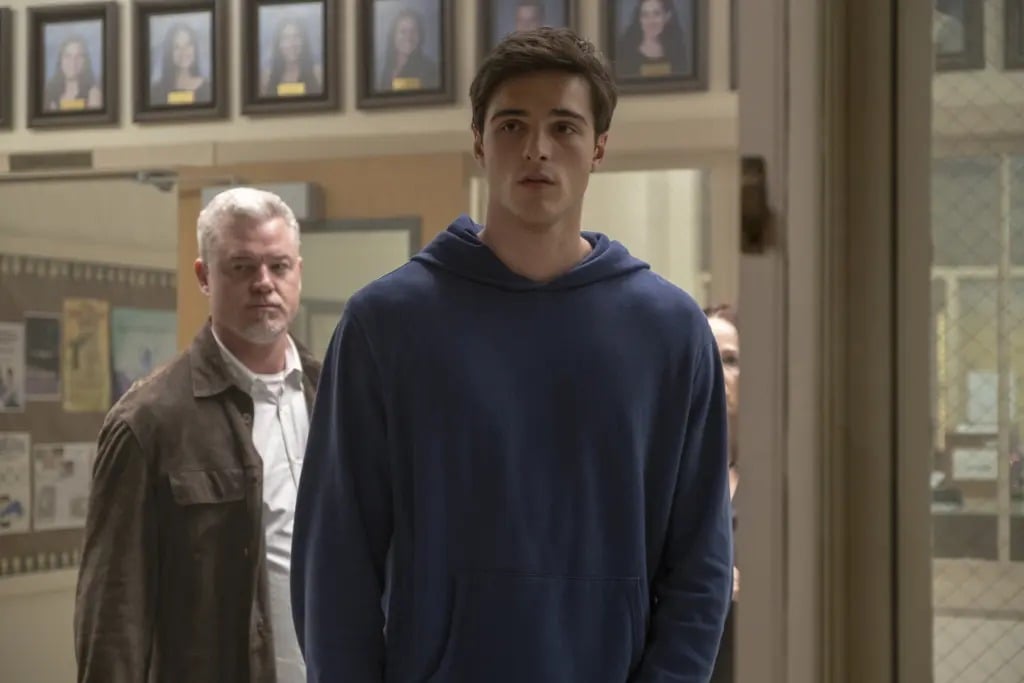
Upon arriving at Nate’s house, he looked to be in high spirits (or tipsy), singing a song.
In Nate’s kitchen, Cal said Nate that he is attending SLA meetings, which is “Sex and Love Addicts.”
In the premiere, Cassie (Sydney Sweeney), Nate’s fiancée, turned to OnlyFans to try and earn $50K for extravagant wedding flowers.
Cal raised concerns to Nate about Cassie’s photos and suggests Nate may be facing financial issues after taking over his construction business, but Nate brushes him off.
He then warned him about “chasing pleasure” instead of appreciating what he had, prompting Nate to shut him down with a blunt accusation.
Cal responded by denying it, saying, “I’m not gay, I was a hedonist.”
To note, Dane announced his ALS diagnosis in April 2025 and he passed away just short of a year later, on February 19, 2026.
ALS “is a nervous system disease that affects nerve cells in the brain and spinal cord,” leading to “loss of muscle control” that progresses over time, according to the Mayo Clinic. It has no cure.