corruption
The other way
The civil service structure must deliver and there should be many models such as the Jhang variety.
By Raza Rumi
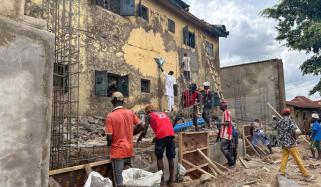
Much has been written about corruption and how there seems to be no way out of the morass we find ourselves in. The recent survey of Transparency International and other such tools indicate that most citizens are dissatisfied with the way the state works. Small wonder, that we have insurgencies and a growing gap between the public and the state machinery. It is also a cynical reality truism that change cannot come from within the system but sometimes there are exceptions. Paradoxically, a district management officer took the lead two years ago and set a model of tracking and addressing corruption. Zubair Bhatti, the district coordination officer (DCO) was posted in Jhang where he started a small initiative in the district.

The age of the roadblock
Those of us living in big cities have found our lives significantly affected by the phenomenon known as the roadblock
By Aasim Sajjad Akhtar
We are told that this is the 'age of terror'. To combat 'terror' it is necessary to enhance the state's coercive capabilities. Accordingly, more money must be spent on acquiring weapons and surveillance technologies and providing our troops with counter-insurgency training. Perhaps, most importantly, the 'nation' must be on board in this epic battle; hence the state's propaganda machineries work harder and faster than ever before to ensure that the security state enjoys the (passive) consent of the mass of people.

Radical view
The US has always benefited enormously from the contribution of immigrants
By Ammar Ali Jan
Sunaina Maira successfully demystifies not only the Western view about Muslims and South Asians but also challenges the long-held belief that the West carries no biases against the Muslims and South Asians. A PhD from Harvard University, Maira teaches at the University of California: Davis. Her teaching and research interests focus on youth, popular culture, transnationalism, South Asian immigrant communities, and the US. Reflecting on her interests, her latest book is titled, Missing; youth, citizenship and Empire after 9/11. Maira has also authored another book, Desis in the House: Indian American Youth Culture in New York City. She was one of the founding organisers of Youth Solidarity Summer -- a programme designed for young activists of South Asian descent, and the South Asian Committee on Human Rights (SACH) that focused on post-9/11 civil and immigrant rights in Boston. A social activist working for rights of immigrants, Maira shares her pointed views with TNS on issues facing the Muslim and South Asian community in the US.

Incentives for rapid industrialisation
Industrial investment should be given complete immunity from tax for ten years
By Huzaima Bukhari and Dr. Ikramul Haq
Our tax policies are anti-industrialisation. The need of the hour is value-added exports and new investment in the industrial sector. In our previous article, we highlighted the areas from where at least additional revenue of Rs2000-3000 billion can be generated. However, Finance Bill 2010 has once again confirmed our contention that the ruling elite is not at all interested in giving relief to the poor. The rulers want to keep their control over landless tillers by keeping the country backward.

earth
Out of reach
The World Bank estimated in 2007 that overall land degradation is costing Pakistan up to 2 percent of its annual GDP
By Asma Rashid
Human activities and habitation patterns result in multiple effects on land and its ecosystem. Loss of soil fertility resulting in reduction of land productivity, soil erosion, waterlogging, desertification, salinity and loss of biodiversity are some of the outcomes of land degradation.

Fiscal woes
Are more loans an answer?
It is in the national interest to focus on development and promotion of
enterprises instead of getting loans
By Dr Noman Ahmed
Two stories made interesting reading. Two goods trains could not leave for India from Sukkur as no locomotive was available to pull them away. The cargo of dry dates that remained stranded in these trains was feared to perish causing damages worth millions of rupees to respective traders. And it was reported in the media that the Asian Development Bank (ADB) has agreed to lend US$500 million for the revival of the Railways. As per the working norms, a sizable portion of this allocation shall be utilised in procuring consultancy services and other technical components.

aman ki asha
The dialogue goes on
Dilip D'Souza and Beena Sarwar end their email exchange series with a pledge to keep the dialogue going
June 17 2010
Dear Beena,
You ask a pointed question: whether I, "like most Indians, think that if the Kashmiris just stopped agitating, all will be well?"
Well, I'm not sure what "most Indians" think about that, but I don't think that at all. To begin with, I don't think the Kashmiris will "just stop agitating" in the near term, and that's why all is not well now and will not be well for a while. There is too deep a reservoir of resentment and anger for any kind of "normalcy" to return soon. No doubt that only gets further fueled by such measures as the cell phone restrictions. Our governments never seem to comprehend that clamping down on one means of communication cannot stop people from communicating. They will find ways.

India-Pakistan trade
The missing linkEconomic cooperation will definitely lead towards peaceful political relations
By Mahima Taneja
"The partition of India has been the most wounding trauma of the twentieth century. It has seared the psyche of four plus generations of this subcontinent." -- Jaswant Singh
India has had bitter relations with Pakistan ever since its creation and the painful memories of partition continue to weaken these two countries till date. Successive wars, the unresolved Kashmir issue and terrorist attacks over the past five decades have only aggravated the situation. The governments of both the nations have constantly tried to maintain diplomatic relations, but in vain.

On the right track
It is time that the people of India and Pakistan assert themselves
By Pritam K. Rohila
Lately, government officials from both sides of the Indo-Pak border have been making right kind of noises in support of peace between the two countries. We hope they really mean it, and pursue it diligently till they succeed.
Surely, it will not be an easy task. In order to accomplish this long-awaited dream of many Indians and Pakistanis, they will have to be sagacious and far-sighted. They will need to look beyond their instinctive fears and anxieties, and allow greater role for their wisdom in their deliberations. They should transcend their turbulent history, and overcome mutual suspicions. Finally, they better rein in the rogue elements among them, so that any misadventure does not derail the process. Otherwise, any agreement they come to will meet the same fate the Tashkent, Shimla, and Lahore agreements did.

Correction
The photograph of Mr N R Narayana Murthy, Chairman and Chief Mentor Infosys Technologies, Limited, was mistakenly published in place of Vineet Jain's photograph last week. Jain (above) is the Managing Director Times of India.


corruption

The other way

The civil service structure must deliver and there should be many models such as the Jhang variety.

By Raza Rumi

Much has been written about corruption and how there seems to be no way out of the morass we find ourselves in. The recent survey of Transparency International and other such tools indicate that most citizens are dissatisfied with the way the state works. Small wonder, that we have insurgencies and a growing gap between the public and the state machinery. It is also a cynical reality truism that change cannot come from within the system but sometimes there are exceptions. Paradoxically, a district management officer took the lead two years ago and set a model of tracking and addressing corruption. Zubair Bhatti, the district coordination officer (DCO) was posted in Jhang where he started a small initiative in the district.

Given its simple nature and adequate media coverage, very soon the 'model' became a guiding principle for the Punjab Government. It definitely goes to the credit of the Chief Minister that he noted such a development and paid attention to it. This is why Shahbaz Sharif has gained a favourable reputation over the years. I know many analysts have issues with the Shahbaz Sharif administration but the truth remains: this is a government whose leadership is responsive to citizens' concerns.

What is Jhang model and why is it important? As is widely known, petty corruption occurs because of lack of political will, and where even that is present, and because of lack of effective information and outreach. Information and feedback have helped develop effective modes of governance across the world. For instance in Bangalore, India the citizen report cards were introduced by a civic group and now their use is widespread. These scorecards highlight the specific issues with services and enable the government to make changes. Focusing on the citizen means that all change and reform must be guided by information given by the citizens.

In Jhang, Bhatti, a pro-active DCO had directed all clerks in the district, who handled land transfers, to submit a daily list of transactions, giving the amount paid and the cell phone numbers of the buyer and the seller. Thereafter, the DCO called the buyers and sellers to undertake spot checks to find out whether they had been asked to pay bribes or commissions. In the process, some of the lower officials were taken to task and this spread the right kind of message among the land registration staff: a powerful citizen voice was around. Similarly, this model was then applied to state service providers such as vets who are used to taking bribes from farmers.

The spread of cell phones in every corner of the country -- 20 percent of the poorest 20 percent of Punjab households have cell phones, according to a recent survey -- provides a huge opportunity to tap citizen feedback and ensure that his or her voice is being heard. State can potentially reach the citizens and check if he or she underwent extortion or received a low quality service. Information and distance are not a big challenge anymore.

The News reported it and later international publications such as The Economist also covered this development. Such was the impact of a simple tool that the Chief Minister and senior bureaucrats took note of this development and now the Punjab government has decided to scale up this operation. It is definitely a heartening development, especially when one is so used to finding no light at the end of Pakistani tunnels of officialdom.

Technology has also helped facilitate this concept. For instance, mobile phones are now a key instrument to advance and deepen citizen information levels. Cell phones are almost universal. Officials in remote corners of the districts can use this distance to extort money from citizens for ordinary transactions -- a health centre operation, registration of property, domicile issuance, driving license etc -- services that are either free or at nominal official cost or with well defined user charges. The idea of using information and getting feedback removes distances and layers of officials between the supervisor and the citizen to allow the supervisory officers to directly find out if money was extorted or his/her concern was ignored or trampled.

Thus, by a direct connection with the user of a public service, the chain of collusion among petty officials can be undone by regular monitoring from the district or provincial headquarters. The Government of the Punjab has now started to implement this in several districts and divisions, most notably Bahawalpur, with a focus on property registration. The idea that the Chief Minister, a Commissioner or a DCO can check on the delivery of a bribe-free service is quite a novel one. It has started to show some results though there is a long way to go.

It is unfortunate that discourse on corruption in Pakistan is limited to high-level scandals. The everyday corruption that disempowers the citizen is often neglected or made invisible. TV anchors spend hundreds of prime time hours to dig out old and new scandals with a primary focus on the politicos. This has been our national tragedy since the 1950s. After 1947, it was actually issues of evacuee property and complete lack of accountability of the bureaucracy that fostered a culture of embezzlement and malfeasance. But even then the target was the politicians who were disqualified one after the other for their irregularities.

Last month, when I visited Khyber Pakhtunkhwa for a research assignment, I was amazed to find out how the Jhang model had been noted by the key officials in the province. In fact, the Commissioner of Peshawar apparently was calling up the citizens randomly to check if they had paid a bribe. This is how a good idea is spread and institutional culture can evolve incrementally.

But the long-term success of implementing Jhang model anywhere, including the Punjab, requires strong support at least for a period of 5-10 years. Experience from Bangalore suggests that citizen report cards only worked when the state was behind the idea of its implementation and using the citizen feedback to improve the quality, range and reliability of services. In Bangalore, public transport has been made better, petty corruption has been reduced and services like water and garbage collection have shown improvement.

In our context, this initiative must not be rooted in a piecemeal manner. It needs to be institutionalised through a regulation that bounds senior officers posted at the district level. If and when the local governments are elected in power, this feature of institutional reform should also become apart of their mandates. This is the only way it could outlast one regime.

However, we cannot be oblivious to the larger issues. Zubair Bhatti, the innovator, left the civil service soon after he had implemented this initiative. The reasons were of course personal. But this exit from the service is not an enigma -- a lot of capable officers have been leaving the service as the human resource policies of the national and the provincial governments does not reward innovation and those who bring change. Status quo is likely to be rewarded almost always. This leaves us with the dilemma of improving the work environment and compensation packages for the public servants. For instance, most of the civil servants (except the judges in the Punjab) earn a wage that cannot even pay for the basic needs of a family. In such an environment, corruption, dejection and frustration brew and this is a matter of urgent attention.

Whilst the Chief Minister Punjab has taken bold decisions such as the increase in judicial salaries and improving the police compensation, he would be well advised to pay more attention to the state of the public service, especially the executive officers who enforce the writ of the state and regulate rights and entitlements. There are issues such as the federal versus provincial service and their respective share of posts. Indeed, the issue of salaries is well-known but nobody wants to do anything about it other than the customary routine increases such as the one this year. Increasing 50 percent salaries when food inflation has been over 30 percent in recent years is hardly a major change. Most importantly, merit and performance need to be made the cornerstones of the civil service management. Favouritism is still the order of the day not just in the Punjab but across the country and some would say across South Asia. This requires a major policy shift and change of strategy by the elected governments.

The survival of Pakistani state, and to a great degree, rests in making the system work and allowing the governance structures to implement policies. At present, we are far away from this goal.

Pakistan's citizens desperately need the attention and protection of the state. Their voice needs to be heard and factored in the accountability process. The civil service structure must deliver and there should be many models such as the Jhang variety. All these innovations must be welcomed as we face the alarming prospect of state failure.

The writer is a policy analyst, writer and an editor based in Lahore. He blogs at www.razarumi.com


The age of the roadblock

Those of us living in big cities have found our lives significantly affected by the phenomenon known as the roadblock

By Aasim Sajjad Akhtar

We are told that this is the 'age of terror'. To combat 'terror' it is necessary to enhance the state's coercive capabilities. Accordingly, more money must be spent on acquiring weapons and surveillance technologies and providing our troops with counter-insurgency training. Perhaps, most importantly, the 'nation' must be on board in this epic battle; hence the state's propaganda machineries work harder and faster than ever before to ensure that the security state enjoys the (passive) consent of the mass of people.

All of this is good and well until basic common sense interferes. So, for example, over the last 3 years, those of us living in big cities have found our lives significantly affected by the phenomenon known as the roadblock. Police checkposts are strewn across the metropolitan landscape, and we have accepted that this is all for our own good. But the simple fact is that the average roadblock is nothing more than a complete nuisance for pedestrians, cars, motorcycles and bicycles alike. More often than not, these roadblocks are the cause of prolonged traffic jams, and there seems to be little logic in who the police decide to stop and who they do not (or at the very least their logic leaves a lot to be desired).

Come to think of it, I cannot remember ever discovering that a soon-to-be 'terrorist' has been stopped at a roadblock, or even that any combustible materials have emerged from a vehicle stopped for a search (and we all know that the media would not hesitate even slightly to make this into news). More generally, I do not believe that ordinary citizens are any safer in the 'age of the roadblock' than they were previously. The government and media have gone out of their way to prove that things are much better now than they were a year or so ago, but this is all about perception. Are things better for those who live in the war zones of Khyber Pakhtunkhwa and FATA? Do the Ahmadis feel safer in the wake of last month's savage attacks? Can anyone guarantee that an orgy of violence is not around the corner in Karachi?

These obvious indicators to the contrary aside, perhaps we are content to make-believe that things really are better. Maybe the daily roadblock experience is best viewed as some kind of catharsis: we suffer through a few every day and thereby feel like we are contributing to the 'anti-terror' effort (albeit while muttering a few expletives under our breath).

But, surely, common sense should interfere again and pose the question to our conscience: will this 'age of roadblocks' ever end? When will we know that we are safe enough to do away with the checkposts? If the enemy really is, as we are so often reminded, somewhat invisible, and if there is no clear indicator that it is genuinely beaten, then how long will roadblocks continue to be necessary?

About a year ago the Sri Lankan government launched a massive military offensive against the Tamil Tiger rebels in an effort to 'end' the civil war of three decades. Sri Lankans and the rest of the world were told that the initiative was an overwhelming success (so what if the 'anti-terror' brigade committed innumerable crimes against humanity?) and that the 'terrorists' had been struck a decisive blow. A year later, it is worth asking if the Sri Lankan state has relinquished any of its acquired coercive capacity? Has the security state been dismantled? The historic and systematic discrimination against Tamils that fueled the Tiger insurgency is to be forgotten?

The point is simply that this 'age of terror' logic is tenuous at best. It does not take a rocket scientist to recognise that, if things pan out as they have been pitched to us, this war will never end, and the 'age of terror' will go on and on. Most of the present generation has no recollection of the Cold War, and even those who lived through it probably forget, that that war was similarly endless, and that when it eventually did end, many ordinary people found it hard to it reorient themselves and their worldviews. It did not take very long for the 'Evil Empire' to give way to the 'age of terror', and for a new unending war to be concocted. In other words, the indoctrination and manipulation that took place during the Cold War had a long-term effect that extended long beyond the end of the actual confrontation between the United States and the Soviet Union.

Today, there is no Soviet Union that can be depicted as public enemy no. 1. To some extent, a reified 'Islam' fulfils the role in the Western metropolis. Whereas the Soviets and their allies were tangible enemies, 'Islam's' vagueness makes it a compelling enemy. In the Muslim world, however, the security state and its propaganda apparatus have to be much more creative. Frankly, the imagination of Muslim ruling classes leaves a lot to be desired, which means that the ordinary populace is far too easily moved by hollow slogans (or alternatively has become terribly cynical). In Pakistan's case, the imperative of security is not new. Sixty three years on, we are still being told to believe that India and Afghanistan are mortal enemies and that there is no question of compromising on the 'greater national interest'.

It is conceivable that the 'age of terror' will eventually peter out, just like the Cold War before it, and that we will then enter a new fear factory constructed by the Empire and its satellites. What will be the state of the world's people and the eco-system that sustains us in this next incarnation of imperialism? It is impossible to say, but surely even those who are seriously deluded about capitalism and its global effects recognise that things are likely to get much worse before getting better. And there is no guarantee that better will even happen. We need much more introspection and critical awareness of what is going on around us, and in particular during those long waits trying to get through those roadblocks that are supposed to make us feel safer.


Radical view

The US has always benefited enormously from the contribution of immigrants

By Ammar Ali Jan

Sunaina Maira successfully demystifies not only the Western view about Muslims and South Asians but also challenges the long-held belief that the West carries no biases against the Muslims and South Asians. A PhD from Harvard University, Maira teaches at the University of California: Davis. Her teaching and research interests focus on youth, popular culture, transnationalism, South Asian immigrant communities, and the US. Reflecting on her interests, her latest book is titled, Missing; youth, citizenship and Empire after 9/11. Maira has also authored another book, Desis in the House: Indian American Youth Culture in New York City. She was one of the founding organisers of Youth Solidarity Summer -- a programme designed for young activists of South Asian descent, and the South Asian Committee on Human Rights (SACH) that focused on post-9/11 civil and immigrant rights in Boston. A social activist working for rights of immigrants, Maira shares her pointed views with TNS on issues facing the Muslim and South Asian community in the US.

The News on Sunday: For your book Missing, what particular group from the South Asian immigrant community were you focusing on your research?

SM: I was engaging with the Muslim youth from South Asia that had recently migrated to the US. These youngsters were generally from lower-middle class to working class backgrounds and were weak at speaking English. Most of them were students who worked part time in the service industry to keep themselves afloat.

I chose this particular segment of society because I feel it had been largely ignored in the mainstream narrative on the war on terror and its impact on migrant communities. Affluent Muslims in the US had positioned themselves immediately to represent the entire Muslim community in the US and were constantly trying to cement their loyalty to the American state by refusing to criticise US foreign policy, especially towards Muslims. So, I feel that the way the voices of certain segments opposed to the "war on terror" were suppressed in the mainstream raises a lot of questions about citizenship in this global age and also about the extent to which dissent is tolerated in the "free world."

TNS: How did you feel the Muslim immigrant youth from South Asia responded to the 9/11 attacks in America?

SM: There was almost unanimous criticism of the US invasion of Afghanistan amongst this segment of the population. They were always quick to point out the US hypocrisy in supporting religious extremists in Afghanistan during the 1980s and also the US aid provided to dictatorial and corrupt regimes in the Muslim world. Hence, they were not impressed by George Bush's rhetoric of spreading democracy in the Muslim world, nor did they view the US as a liberation force. Owing to the general hysteria in the country against Muslims and for the war, they were unable to articulate their position in public and kept a painful silence over what they perceived was an unjust war. This is an art that the modern state has mastered, that of creating "common sense" through government propaganda with the media's complete backing. This helps in marginalising dissenting views which I feel was the reason many Muslims were not able to openly discuss America's foreign policy goals.

TNS: In a country where there are substantial civil liberties, why did the Muslim youth still feel uncomfortable in putting forward a dissenting point of view?

SM: You see while we feel there are certain universal rights enjoyed by people living in the West, the state is always quick to use coercion to discipline the population by setting certain examples. So, the witch-hunt against progressive elements as part of "McCarthyism" during the 1950s was necessary to keep a check on the growing influence of leftists in the United States. There is a plethora of examples of the 19th and the 20th century where the state bypassed all civil liberties to give a clear message: Dissenting opinion will be tolerated as long as it remains within the contours of liberal democracy. This helped in containing constructing a democratic order that was confined to the "two-party" system and eventually any radical notions were simply pushed to the peripheries.

The same happened after 9/11 when the state acquired draconian powers through laws such as the Patriot Act. More than 5000 Muslims were incarcerated and hundreds of immigrants were deported to their native countries. The environment of fear was further heightened by the state's presence in all spheres of an individual's life through wire tappings by spying agencies. Now of course, this cannot be compared to the measures of fascist regimes but there was a clear message given to immigrants: fall in line or face the consequences.

These policies can be understood using the theoretical framework used by scholars such as Raymond Williams and Edward Said who analyse such "imperial feelings". These consist of a phobia not only towards the "enemy territories", but also creates suspicion amongst immigrant communities who migrate from regions that the US is in conflict with. This places extra pressure on these immigrant communities to continually display their loyalty to the American state, and to apologise for crimes that they had nothing to do with but could be committed by a certain member of their community. Of course, this is not a pressure that white Americans have to face; even certain white Americans are involved in heinous crimes, like initiating unjust wars or bringing the financial system to its knees which is what occurred recently. So, to avoid this trouble, most of the immigrants prefer to concentrate on their work rather than take the risk of confronting the policies of the government.

TNS: Critics would argue that the US at least provides these immigrants the possibilities of upward mobility, something that is denied to them in their home countries. If they have such problems living in the US, why don't they move back to their countries of origin?

SM: You see, the US has always benefited enormously from the contribution of immigrants. So this idea that we should be in awe of Western benevolence for allowing immigrants into their society is absurd since the only reason why countries allow immigrants into their territory is because they need them. Besides, the reason why people gravitate towards developed countries should also be seen in a historical context. Almost the entire third world was colonised by the West which benefited greatly out of the exploitation of its natural and labour resources which resulted in extreme poverty in the colonised world besides other problems. Also, in the global capitalist system, the US and its Western allies have shown little tolerance for any deviance from the norms of global capital and have been regularly involved in sabotaging left-leaning governments, including through military coups, while supporting right-wing dictatorships in their place. Further, there are no restrictions on Western capital that moves into the developing world and almost wipes out the indigenous industries in these countries. So while the US promotes "free trade," it wants to impose more and more restrictions on the free movement of labour.

Hence, considering the heavy involvement of Western countries in the affairs of the Third World, it becomes pretty hypocritical to suggest that immigrants don't have a right to live in the West or that they should always be compliant and follow the line of the state. Not many people want to leave their own lands, but there are certain historical imperatives that compel them to do so and we should be sensitive to them.

TNS: Over the past nine years, have you seen any kind of political activism taking root amongst the Muslim Youth in the US?

SM: Muslim groups are slowly becoming active in the mainstream by forming alliances with progressive groups. Right after 9/11, and after the constant stereotyping of Muslims that followed, many amongst the Muslim youth became defensive and preferred a Muslim identity for themselves over all other identities. However, now there is a realisation within the Muslim community that they cannot remain isolated from the rest of the society and that they must not only initiate a struggle for their rights, but also connect their struggle to other movements that are taking place in the US. So for example, many young Muslims took active part in the anti-war movement at the start of the Iraq war and many were also seen rallying for immigrants' rights. They have also reached out to various organisations that fight for civil liberties and have tried to strengthen that relationship. So I feel this is a positive process that must be further deepened.

TNS: You are critical of the discourse of liberal feminism and feel that it is inadequate in conceptualising women rights in the Third World. Can you explain this position?

SM: There is a constant attempt to view Muslim women through a liberal framework i.e., to constantly portray them as victims without any agency. So issues of marriage, dress code, and "free choice" are often invoked to contrast the relative freedom enjoyed by Western women with those living in the Muslim world. From this analysis, it is then deemed perfectly legit for feminists to support imperial projects in the Muslim world in the name of "women rights." As I stated earlier, such a narrative ignores the many other problems faced by women in the Third World and the Muslim World, some of which are a direct result of the global economic system. So for example, if we agree that a right to a decent wage, education, health and freedom from oppression, colonial rule and poverty are no less important than the freedom to wear the clothing of your choice, then we see the picture is radically altered.

We would then have to critique not only existing social practices in the Muslim world, but also critique the continuous interference of Western powers in colonising and dispossessing both native men and women from their own lands. For example, it would then not only be critical of the ideology of Hamas towards women, but would be far more critical of Israeli policies that colonise, dispossess, and humiliates women. In the case of Afghanistan, we cannot be critical of the brutal treatment meted out to women by the Taliban without understanding the complex history of Western involvement in the country that continues to plague the region. If a woman in these parts of the world chooses to resist imperialism and colonisation, we should also consider that as part of being the larger struggle for female emancipation.

So I feel radical feminists should not create a dichotomy between the "free Western women' and the "oppressed Muslim women" but instead should realise that the struggle for women rights in the developing world is linked with their struggle against the unjust economic and political order prevalent in the world today.


Incentives for rapid industrialisation

Industrial investment should be given complete immunity from tax for ten years

By Huzaima Bukhari and Dr. Ikramul Haq

Our tax policies are anti-industrialisation. The need of the hour is value-added exports and new investment in the industrial sector. In our previous article, we highlighted the areas from where at least additional revenue of Rs2000-3000 billion can be generated. However, Finance Bill 2010 has once again confirmed our contention that the ruling elite is not at all interested in giving relief to the poor. The rulers want to keep their control over landless tillers by keeping the country backward.

The performance of the manufacturing sector has been dismally poor during the last three years. The hostile tax structure is one of the factors for this amongst many others. Corporate tax rate at 35 percent is too high. Other countries are reducing corporate rates to 15 percent to 20 percent whereas in Pakistan, the Federal Board of Revenue (FBR) has plans to raise it to 40 percent. It will amount to 50 percent tax rate as 10 percent tax is imposed on dividends that are distributed from profits on which a company has already paid tax. This year tax is also imposed on gain of shares of listed companies if disposed of within 12 months of acquisition. This will further discourage investment in public listed companies.

Pakistan's industrial sector remains structurally narrow-based. This narrow base is predominantly agrarian in nature, and hence susceptible to exogenous factors, such as weather. This is highlighted by the role of cotton and sugarcane in the agriculture and manufacturing sector. Together, these two crops account for nearly 20 percent of value-added agriculture and over 30 percent of LSM. In the face of this reality, it is imperative that the budget makers ensure the policy of diversification as well as developing the indigenous small and medium enterprises and large-scale engineering sectors. But this point is missed in almost every budget presented during the last 15 years.

Tax investment incentives have in recent times become a favourite tool in development strategy both for domestic investors and for attracting foreign direct investment (FDI). The rationale for their use is that they constitute an important, if not a major element, in determining investment behaviour. Unfortunately, the Pakistani budget makers have always been preoccupied with the revenue targets and never gave a serious thought to providing some long-term investment-oriented tax incentives for infrastructure development, without which economic development cannot be achieved. The foreign investors will choose a place which, besides tax incentives, ensures stability, consistency and excellent infrastructure facilities. These elements are missing in Pakistan and the result is 65 percent decline in foreign direct investment.

Incentives increase the net of tax rate of return and thereby reduce the need for large initial capital investment and also reduce risk. The availability of incentives tends to make otherwise unpromising and risky ventures more profitable. There was a dire need to provide some incentives for industrial and business growth in the budget 2010-2011, but one hardly finds any such measures. The following are some of the tax incentives that can go a long way to ensure revival of the economy and rapid industrial growth in the country. The list is not exhaustive, but mentions a few essential ones that have been missed in the Budget 2010-2011.

Industrial investment should be given complete immunity for ten years from probe by the tax authorities, and the foreign exchange regulations should be waived. It will help the State to bring back the capital that fled from the country and also new capital would be attracted, especially from foreign investors and Pakistanis who are keeping billion of dollars abroad. There should be a well thought of scheme to bring untaxed and undeclared money back into the industrial investment. The immunity should be conditional to investment in industry alone.

A ten-year tax holiday for enterprises engaged in developing or operating and maintaining infrastructure facilities should be announced. The infrastructure facilities which will enjoy this benefit should include roads, toll roads, bridges, rail systems, highway projects water supply projects, sanitation, sewage and solid waste management, airports, ports inland ports and inland waterways.

To encourage the best use of technology and to lower the cost of doing business in Pakistan, payments for the following categories of software made to non-residents should be exempted from withholding tax. They are: site licences, software downloaded from the Internet by end-users, and software bundled with hardware.

Intellectual properties and their exploitation has become a significant source of competitive advantage in the knowledge economy these days. To enhance Pakistan's competitiveness in this respect, accelerated amortisation allowance over a three-year period should be allowed for capital expenditure incurred on the following categories of intellectual properties:

- Patents;

- Copyrights

- Trademarks

- Registered designs;

- Geographical indications;

- Layout designs of integrated circuits; and

- Protection of confidential information.

Employee stock option schemes have a significant impact on corporate performance. The schemes have been powerful tools to motivate their employees to greater innovation and enterprise. This kind of scheme should have income tax exemption for up to Rs. 5 million worth of stock option gains arising from the exercise of the employees' option over a ten-year period. The scheme should be available to all companies that meet certain conditions. One key condition should be that companies will have to offer the stock options to at least half the employees in the company.

Enterprises providing telecommunication services and broadband networks, and Internet service providers which provide these services should be allowed a tax holiday for five years and a deduction of 25 percent of profits for further period of five years. Pakistan must concentrate on the development of IT-based projects, which alone can make us competitive in the world markets in the coming days.

The economic managers while making the budget for financial year 2010-2011 failed to consider the fact that taxation affects the amount of capital available by encouraging or discouraging savings and foreign investment. It can also divert investment and labour from one sector to another. It affects the level and productivity of employment by influencing individual choices between work and leisure, the intensity of effort on the job and employers' decisions on technology. Taxes affect an entity's ability to diversify and expand through their import or input costs and managerial behaviour. They may also have a bearing on less tangible factors such as entrepreneurship and technical progress. Some empirical evidence also suggests causal relationships between the level and types of taxes and key growth determinants in the areas of investments, export, employment, productivity and innovation (Marsden, 1986).

Tax policies must concentrate on the revival of industrial sector by providing some result-oriented incentives for foreign and domestic investment. The single important reason why tax incentives for industrialisation are essential is to get macroeconomic policies right, as the alternative ways of financing government expenditure. Money creation, mandating larger required reserves, domestic borrowing and foreign loans can have very harmful effects on the already ailing economy.


The authors, tax lawyers, are members of visiting faculty of Lahore University of Management Sciences (LUMS)


earth

Out of reach

The World Bank estimated in 2007 that overall land degradation is costing Pakistan up to 2 percent of its annual GDP

By Asma Rashid

Human activities and habitation patterns result in multiple effects on land and its ecosystem. Loss of soil fertility resulting in reduction of land productivity, soil erosion, waterlogging, desertification, salinity and loss of biodiversity are some of the outcomes of land degradation.

Climatic variations of wet and dry spells and the ever-increasing pressure on land resources due to population explosion contribute to land degradation and desertification. According to a study, land degradation costs South Asia, Iran, and Afghanistan US$ 10 billion annually which is approximately two percent of the region's GDP and seven percent of the value of its agricultural output.

Of all the types of land degradation, water erosion ranks the highest, bringing about a loss of US $5.4 billion followed by wind erosion (US $1.8 billion) and salinisation (US $1.5 billion). The decline in soil fertility costs US $0.6-1.2 billion. Pakistan ranks third in the region with about 61 percent of the total agriculture land severe to moderately degraded.

The World Bank estimated in 2007 that overall land degradation is costing Pakistan up to 2 percent of its annual GDP. Reduced agricultural productivity caused by soil salinity and erosion renders a loss of more than 1.3 percent of GDP. About 0.3 percent of GDP loss is caused by deforestation and rangeland degradation.

In Pakistan, land degradation mainly encompasses desertification, salinity, soil erosion, waterlogging, and negative nutrient balances. Poor irrigation and drainage practices, overgrazing, deforestation, competition for water, drought, and flooding are basis for land degradation in Pakistan. About eighty percent of the total land area is either arid or semi-arid; hence desertification poses serious threat and at the same time sets a grievous challenge. More than one-third of the country area has been classified as under risk of desertification.

Mismanagement in irrigation practices, erratic rain patterns and diminished precipitation worsens the situation. According to a careful estimate, about two-thirds of Pakistan's population depends on dry lands for their livelihood through agricultural activities, including farming and livestock rearing. Land degradation has not only environmental impacts but also economic implications as it decreases the productive capacity of ecosystems.

The problem of waterlogging and salinity are inter-linked and co-exist at most of the places. Poor irrigation practices, higher evaporation levels, seepage of water from canals and faulty drainage raises the level of underground water consequently pushing up the minerals and salts to the soil surface called salinity and sodicity (sodium deposit).

At country level, out of total twenty two million cultivable land, waterlogging and salinity affects, moderately to severely, about eleven and six million hectares respectively, with over 1.4 million hectares being rendered uncultivable due to excessive salinity levels. According to an estimate, the farm yield is decreased by twenty five percent.

Waterlogging and salinity destroys about forty thousand hectares of irrigated land annually. According to the most recent (June 2009) figures released by the Ministry of Environment, thirty eight percent of agricultural land of Pakistan has been blighted by salinity and waterlogging. The extent of waterlogging and salinity is higher in Sindh than elsewhere in Pakistan being near to the Arabian Sea. Negative nutrient balance of the soil, especially in Punjab, worsens the soil fertility crop productivity even further.

Deforestation is another problem that degrades land. An appallingly small area of Pakistan is covered by forests; that is 5.2 percent. In Punjab, the forested area is less than 3 percent and in Sindh it is even less. According to official statistics, rate of deforestation during 1990 to 2005 is 2.1 percent or 47,000 hectares annually, which is three times higher than the other South Asian countries. Deforestation rate is higher in Northern Areas and Khyber-Pakhtoonkhwa than Sindh and Punjab, mainly attributed to the requirement of fuel wood.

The estimated cost of deforestation, as calculated by World Bank in 2007, is between Rs206 to 334 million (US $3.4 to 5.5 million) per annum. Up to 80 percent of the rangeland/pastures of Pakistan are degraded attributed mainly to livestock farming system.

Livestock numbers have doubled since 1976 and exceeded the capacity of most ranges. Over-grazing results in removal of vegetation from fragile slopes and reduces their productivity. Deforestation and pasture degradation is one of the main root causes of soil erosion (both by water and wind) leading to removal of top soil and desertification.

About 13 million hectares of land have been damaged by soil erosion leading to reduced crop yield and loss of fertility. Soil erosion enhances the sedimentation in dams and water reservoirs. Sediments carried by the Indus and its tributaries to the Tarbela and Mangla dams have reduced the storage capacity of the reservoirs by more than twenty eight and twenty one percent respectively.

Land degradation is a serious development and economic concern for Pakistan requiring serious attention and practical steps. Population explosion coupled with impending challenges of climate change reducing crop yields due to increased heat stress and water resources depletion demand serious effort. In addition to institutional reforms and policy formulation and enforcement to combat the situation, scientific research and technology should also be focused for finding cost-effective solutions to the problem of land degradation.

The idea of using marginal and saline lands for producing bio-fuel crops doesn't hold much water with a constantly growing demand of food production for a growing population. Instead, attention should be given to curing the saline or waterlogged land through cost-effective methods. Eucalyptus and Casuarina trees are known to be effective in lowering underground water table and de-saline the land.

Cultivating salt tolerant crop varieties which can be grown in saline lands is another lucrative and effective option. Dennis Bushnell, a NASA scientist, says there are some 10,000 salt tolerant (halophytic) plant species, of which 250 are potential staple crops. Saline Agriculture Research Centre (SARC), University of Faisalabad, is a dedicated research centre aiming to produce salt tolerant plants, especially cereals through conventional and modern genetic tools and demonstrate the success through farmers' participatory programs, for making productive use of saline resources for owners and the nation.

According to researchers of Nuclear Institute of Agriculture, Tando Jam more than 1500 salt-tolerant grain, fruit and fodder species having medium to high levels of tolerance to saline soils have been identified for practising saline agriculture in the country. In addition to these, there are opportunities to increase the salt tolerance of existing crops using conventional plant breeding and molecular biological approaches. It is also necessary that the government should encourage local agencies by supplying all sorts of facilities for reclaiming salt affected lands. Re-vegetation is required to prevent soil erosion and inundation to keep the chemical composition and fertility of the soil intact.

Recovering affected land is a practical and profitable venture only if carried out under proper management and by observing suitable precautionary measures.

The author can be reached at asma.ras@gmail.com


Fiscal woes

Are more loans an answer?

It is in the national interest to focus on development and promotion of

enterprises instead of getting loans


By Dr Noman Ahmed

Two stories made interesting reading. Two goods trains could not leave for India from Sukkur as no locomotive was available to pull them away. The cargo of dry dates that remained stranded in these trains was feared to perish causing damages worth millions of rupees to respective traders. And it was reported in the media that the Asian Development Bank (ADB) has agreed to lend US$500 million for the revival of the Railways. As per the working norms, a sizable portion of this allocation shall be utilised in procuring consultancy services and other technical components.

Several questions arise from this approach. With a possible stagnation of GDP, a whopping foreign loan burden of US$54 billion and a sluggish economy, is it wise to borrow for a moribund infrastructure which needs more than just cash injection? The responses could be entirely obvious. Our fiscal woes need an objective assessment, critical review and bold decisions to take the country out of the economic quagmire that it has plunged for the past two decades.

A cursory review of the budgets presented during the earlier years show that about one fifth of the total outlays are allocated for establishment cost. A detailed study with focused terms of reference will be required to examine the performance benefits, value for spending and other similar parameters. Some factors are apparent. Financial management, especially decisions pertaining to procurements and construction, need to be drastically streamlined. Various public sector institutions have spent millions in construction of buildings that are either entirely unutilised or under utilised due to weak feasibility.

Lines of ghost school structures, abandoned basic health units and similar infrastructure are common observations, especially in remote areas of the country. Similarly, there is a pool of expensive cars brandishing green number plates. One finds mid-career civil servants or ordinary officers using plush luxury jeeps each of which costs not less than five to six million rupees to the exchequer. In contrast, the lower grade government officials have to brave commuting ordeals in rickety transport after coughing out one third of their salaries. It is a well-known fact that acts and deeds subscribed by the higher tiers become trends worth emulating for all and sundry.

Taxation experts and independent observers have been presenting arguments against the spreading web of indirect taxation. It is common sense that indirect taxes adversely affect the already dwindling purchasing power of lower slabs of the society. The conundrums of value-added taxation (VAT) will have intense repercussions on the lower, lower middle, and even middle income groups. As obvious, commodities included in basic kitchen basket will also not be spared from the negative fall outs of this across-the-board taxation.

Given the nature of unregulated supply chains of essential food items, role of middle men and a weak administrative capacity of the government to manage even distribution of food articles, indirect tax shall erode the quality of life of ordinary people.

It is frequently mentioned that the direct tax net for wealthier groups has enormous potential for expansion. It shall not require a foreign consultant to rope in those who get more from this country than their rightful share. Benchmarks can be set by tapping records of all car owners, property owners of 600 square yards, etc.

The FBR should document potential tax payers. Needless to say, acquiring economic balance is impossible without a fair tax system.

Employment offers and schemes of various kinds are hurriedly cobbled together by the regime to extend financial benefits to the deprived. One must appreciate the intentions of the regime which are entirely noble. But in a situation where government is already cash-strapped and struggling to keep afloat, these solutions appear lacking a long-term vision. In times of economic depression, bold actions are needed from the government. One such action is the creation of an enabling environment for investors. Strong commitment and support of the incumbent regime is extremely vital in several investment opportunities of regional significance.

Notable mentions include the Reko Diq Copper and gold enterprise in Balochistan, Thar coal works in Sindh, mineral resources of Swat valley, dairy development projects in wastelands and infrastructural projects to counter electricity shortage. Wealth of knowledge, human resource and initiative already exists. It will be in the larger national interest to focus on accelerated development and promotion of enterprises instead of expensive loans that always failed to rescue the country from fiscal morass.


aman ki asha

The dialogue goes on

Dilip D'Souza and Beena Sarwar end their email exchange series with a pledge to keep the dialogue going

June 17 2010

Dear Beena,

You ask a pointed question: whether I, "like most Indians, think that if the Kashmiris just stopped agitating, all will be well?"

Well, I'm not sure what "most Indians" think about that, but I don't think that at all. To begin with, I don't think the Kashmiris will "just stop agitating" in the near term, and that's why all is not well now and will not be well for a while. There is too deep a reservoir of resentment and anger for any kind of "normalcy" to return soon. No doubt that only gets further fueled by such measures as the cell phone restrictions. Our governments never seem to comprehend that clamping down on one means of communication cannot stop people from communicating. They will find ways.

I remember the family I met in Srinagar on my first visit on '04, warm and welcoming. On my second visit a few months later, even as I entered their home I got the feeling I had overstayed my welcome. Yes, I thought they were being unfair in their coldness this time around. But our conversations had given me an idea of the complex mixture of affection and doubt, suspicion and the desire to reach out, that made up their feelings towards India and Indians like me. If we Indians want all to be well in J&K, we need to search for ways to understand and address that.

Yasmin Qureshi's questions are ones that trouble a lot of Indians: what indeed is the meaning of Indian democracy when there is so much tension and unrest that we are now seeking to eliminate by force? (And will that eliminate it anyway?) (And should a democracy be in the business of eliminating it? or addressing it?) Yet there are also plenty of Indians who see nothing wrong with the use of force. Maybe the concerns about Indian democracy don't occur to them, I don't know. And your last letter's mention of the disappearances in Azad J&K/PoK -- or should we ourselves make the start by referring to it as Pakistan-Administered Kashmir? -- supports what the news tells me as well, that there is plenty of serious unrest and discontent in Pakistan too, and it gets fueled by the actions of your security forces.

In some ways what troubles me more than the tensions themselves are the divides they are causing among us. The language used across those divides (Kashmir, reservations, dam-building, Maoists, Babri Masjid and more) is so heated and polarised that there's no debate or dialogue any more, just an abuse-fest. As perhaps I've indicated in our exchange before, that's no recipe for answering wrenching questions.

And that's the way I feel about our relationship with Pakistan.

And that's why I'm grateful for this exchange we've had, in our own way, over the last few months. At least we've discussed some issues that cause tensions between our countries. Nothing gets resolved with accusations, hostility and prejudice. Perhaps nothing will get resolved with our effort either, but it's at least a tiny step ahead of slipping easily into accusations, and even tiny steps count. I believe that. I think I said once before, I have to believe it.

So thank you, and let's do it again sometime.

yours,

dilip

June 18

Dear Dilip,

I want to start by thanking you for initiating this exchange and driving it with your introspection and openness to other points of view. Sorry about that pointed question which unfairly made an assumption about what 'most Indians' think -- of course there are many shades of opinion in India, and within those shades of opinion are other shades. Nothing is simple.

I think we agree that there are injustices on both sides and rather than the blame game, we need to look inwards at our own situations. Such introspection should include not just what's happening now but the injustices of the past. Internally, perhaps, we need our own truth and justice commissions.

In Pakistan, there is a long list of such injustices, often perpetuated by military dictators, including discriminatory laws perpetuated in the name of religion, oppression of political dissent (not just in former East Pakistan and Balochistan but elsewhere), disproportionate use of force against dissent and deviance (police torture, murderous encounters, deaths in custody, never-ending court cases), discrimination against indigenous peoples in the name of development, unfair distribution of resources and more.

Of course there's a corresponding list for India. In fact I find it amazing that the world knows so little about the injustices that have led to the ongoing unrest in Kashmir, Manipur, Chattisgarh, and elsewhere. Too few people know about the Manipur women who came out in 'naked protest' against such abuses, or Irom Sharmila, the amazing young Manipuri woman who has been on hunger strike for TEN YEARS in protest against the draconian Armed Forces Special Powers Act that is applied to seven north-eastern states besides Kashmir (Andrew Buncombe had a great piece on the issue recently - http://bit.ly/iromsh).

I'm not trying to point fingers. We in Pakistan have our own versions of draconian laws and oppressions that people have been protesting against. India does a far better job at playing down the situation and avoiding bad press. That makes us jealous. Not that we want you to have bad press too, but it would be nice if we had less. Or at least, if people also saw our human side and the tremendous fight that people are putting up against injustice. That is something else we have in common. Surely, we need to gain strength and learn from each other's experiences.

This is the last of this Conversations series, but Dilip, let's keep the dialogue going in any way we can -- 'Guftugu bund na ho,' as Ali Sardar Jafri wrote, hauntingly sung by Seema Sehgal. Both Mumbaikars like you though Seema is from Jammu. She generously allowed me to use her music in my documentary on Kashmir last year (online at http://bit.ly/milnedo). Now Aman ki Asha is initiating a campaign against visa restrictions, Milne Do (same title as my docu). I know you share my views on this -- let people meet.

shanti

beena


India-Pakistan trade

The missing linkEconomic cooperation will definitely lead towards peaceful political relations

By Mahima Taneja

"The partition of India has been the most wounding trauma of the twentieth century. It has seared the psyche of four plus generations of this subcontinent." -- Jaswant Singh

India has had bitter relations with Pakistan ever since its creation and the painful memories of partition continue to weaken these two countries till date. Successive wars, the unresolved Kashmir issue and terrorist attacks over the past five decades have only aggravated the situation. The governments of both the nations have constantly tried to maintain diplomatic relations, but in vain.

According to PM Manmohan Singh, the major reason behind such animosity between India and Pakistan is trust-deficit. So, before improving overall ties a strong base of mutual trust needs to be built. A major step towards building trust is improving the economical relations between the two neighbours through trade and business.

Kautilya was the first one to write extensively on 'Political Economy' as a separate subject in Arthashastra. He theorised that to maintain a strong kingdom the king must develop healthy relations with its neighbouring states through trade. Hence, better trade relations between India and Pakistan will help in building trust as it involves people-to-people contact, which will eventually contribute towards the improvement of political relations.

Recently, the top political and corporate leaders, CEOs and entrepreneurs of India and Pakistan met under the 'Aman ki Asha' initiative organised by the Times of India group and the Jang group to discuss peace initiatives between the two nations through better trade and commerce relations; and urged both the governments to cooperate and help in realising the enormous trade potential between these two major South-Asian countries. Pranab Mukherjee, Finance Minister, emphasised on the need for mutual trust and interdependence for sustained economic growth of India and Pakistan.

Economic cooperation will definitely lead towards peaceful political relations. Textiles, information technology, agriculture, healthcare, energy and education were recognised as the key sectors with highest trade potential in both countries. Economic cooperation in these six sectors have been predicted to be convenient and beneficial to both the countries. Committees for IT and textile sectors have already been set up. Apart from promoting bilateral trade, the business meet also recommended steps to build public support and replace the existing trust-deficit with mutual respect and reliance. The need for easing visa restrictions was also highlighted along with improving the telephone connectivity between the two countries by allowing cell-phone roaming.

These initiatives will go a long way in improving the economic relations between India and Pakistan but their success depends on the governments of these two countries and on how well the people cooperate.

As a matter of fact, if India and Pakistan integrate their economies through more trade, then both the nations can gain a lot. Recorded trade between the two countries is relatively very small at present even though both of them are members of South Asia Free Trade Area (SAFTA). The potential of formal trade between these two neighbours is around 20 times more than the recorded trade. At the time of independence, Indo-Pak trade relations were very strong -- 70 percent of Pakistan's trade transactions were with India and 63 percent of India's exports were to Pakistan. This came down drastically over the years and in 2008 Indo-Pak trade statistical figures lingered around a mere 1 percent. There are a number of reasons behind this -- high tariffs, trade barriers, poor infrastructure, costly transportation, excessively disproportionate red tape, bureaucratic indolence, strict regulations on visa and custom procedures and major political conflicts.

While India granted MFN (most favored nation) status to Pakistan in 1995-96, Pakistan has still not reciprocated. As a result, there is no standard tariff on Indian products in Pakistan. High import duties and other non-tariff barriers have crippled the Indo-Pak trade relations with virtually no foreign direct investment (FDI) flows at present. Ironically, Pakistan needs 140 million kg of tea annually. India, even though being its immediate neighbour, contributes only five million due to 30 percent tariff on Indian tea. The cost of Zinetac, a medicine for acidity, is Rs7.20 per 10 tablets in India but around Rs100 in Pakistan. There are a number of other such instances where India produces the goods needed in Pakistan but their export to Pakistan is very low due to strict restrictions. As a result, smuggling through third countries and underground routes is becoming rampant. Thus, depriving both the economies of profit from bilateral trade and driving the prices further up.

Many people are against the free flow of trade between India and Pakistan. Some fear that this will lead to an economic invasion of Pakistan while others fear that it will facilitate terrorist activities. Indo-Pak trade relations can not be changed overnight. But winds of change are certainly flowing in the right direction. But before people welcome these winds, certain measures need to be taken. The mindset of the people needs to be changed first to build public support for liberal trade relations. People of both the countries need to open up but also remain cautious of the negative activities. Better trade between India and Pakistan will benefit both the countries by raising their GDP and household incomes. Strong economic relations will serve as a catalyst towards the peace-building process.

While doing a research project on partition of India last year, I realised that there is a very long way to go before the animosity in people's heart completely dissolves and they open up to each other. The relationship between India and Pakistan is one marked by nostalgia and pain. The people of these two countries were once upon a time one but the colonial era ruined the unity. Nonetheless, the people of India and Pakistan have been traders for a long time. And now is the right time to renew this connection through trade and commerce and let economics guide politics for a change.


Courtesy: The Viewspaper


On the right track

It is time that the people of India and Pakistan assert themselves

By Pritam K. Rohila

Lately, government officials from both sides of the Indo-Pak border have been making right kind of noises in support of peace between the two countries. We hope they really mean it, and pursue it diligently till they succeed.

Surely, it will not be an easy task. In order to accomplish this long-awaited dream of many Indians and Pakistanis, they will have to be sagacious and far-sighted. They will need to look beyond their instinctive fears and anxieties, and allow greater role for their wisdom in their deliberations. They should transcend their turbulent history, and overcome mutual suspicions. Finally, they better rein in the rogue elements among them, so that any misadventure does not derail the process. Otherwise, any agreement they come to will meet the same fate the Tashkent, Shimla, and Lahore agreements did.

Peace between India and Pakistan is essential not only for a better future of these nations, but also for prosperity and security of the whole South Asian region.

It is too important an issue to be left to the whims of the fickle and weak governments. It is time that the peoples of India and Pakistan assert themselves. They should make their governments heed the needs of the common man, rather than work for preservation of their own power and position.

In this context, we are gratified to note that two major news organisations, the Times of India Group and the Jang Group have launched Aman Ki Asha. So far, they have succeeded in bringing together intellectuals, business persons, and ex-officials from the two countries. Also they have provided a forum for common people, particularly the youth, to express their own aspirations for peace.

Organisations like Pakistan Peace Coalition, Chandigarh's Yuva-satta, and Lahore-based Institute for Peace & Secular Studies continue to play an active role. Credit must be given to Indian organisations like the Asha Parivar, Centre for Study of Society and Secularism, Centre for Harmony and Peace, All India Secular Forum and Pakistani groups like Faisalabad-based Association of Women for Awareness and Motivation, and Toba Tek Singh's St. Peter's High School, who are busy promoting harmony within their own neighborhoods and cities. Their work will provide a firmer basis for peace between India and Pakistan.

For the sake of the future of your and our children, we earnestly hope that you too will join these efforts. Won't you, please?

The writer is the Executive Director of ACHA, the Association for Communal Harmony in Asia (www.asiapeace.org). He can be reached at asiapeace@comcast.net

Courtesy: Kashmir Watch


Correction

The photograph of Mr N R Narayana Murthy, Chairman and Chief Mentor Infosys Technologies, Limited, was mistakenly published in place of Vineet Jain's photograph last week. Jain (above) is the Managing Director Times of India.


  Home|Daily Jang|The News|Sales & Advt|Contact Us|

BACK ISSUES