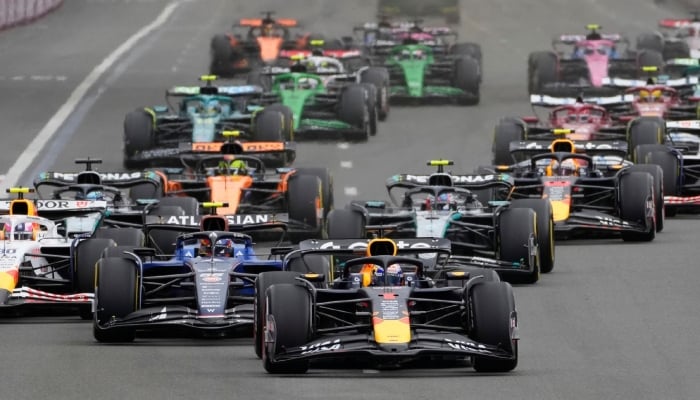
The 2025 F1 season has ended with McLaren winning the driver's championships, and the next year is set to have some major changes.
Following a three-month break, F1 will return with a new set of technical regulations and an 11th team on the grid.
Here is what F1 will look like in 2026:
New rules for cars
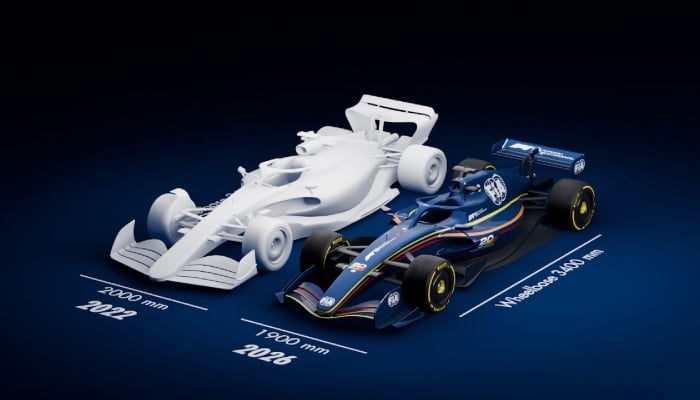
For the next year, cars will be smaller and more environmentally friendly, making racing different in ways no one knows for sure.
They will be 30 kg lighter, 10 cm narrower and have engines with a near 50-50 split between electric and internal combustion power.
Moreover, the engines remain 1.6-litre V6 turbo hybrids, but the MGU-H, which recovers energy from the exhaust and turbo, has been removed, while the proportion of power produced by the hybrid part of the engine has been more or less doubled to about 50%.
The new rules require major changes to aerodynamics. F1 has dropped the venturi-style ground effect system introduced in 2022 and instead added movable front and rear wings.
These are meant to increase straight-line speed and aid cars in recovering more energy under braking.
Furthermore, the changes are sought to bring some unusual quirks. The internal combustion engine will often act as a generator for the battery, meaning it could be running at maximum revs even in certain corners.
The DRS overtaking aid has gone because the opening of the rear wing is required for other purposes. So instead there will be a push-to-pass button that gives extra electrical energy for a time.
British teen making debut
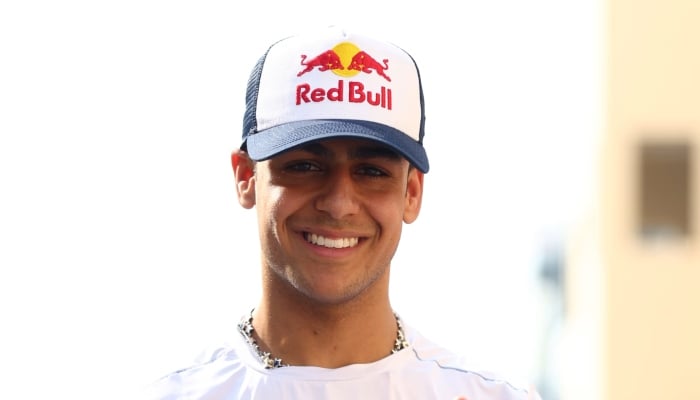
While the majority of the drivers remain the same there have been some changes made to the roster, including a British rookie.
As Isack Hadjar gets promoted to Red Bull as Max Verstappen's new teammate, the 18-year-old Arvid Lindblad will be taking the Frenchman's seat at Racing Bulls.
Lindblad finished his Formula 2 campaign with Campos Racing in sixth place and will be teammate to New Zealander Liam Lawson.
The 11th team
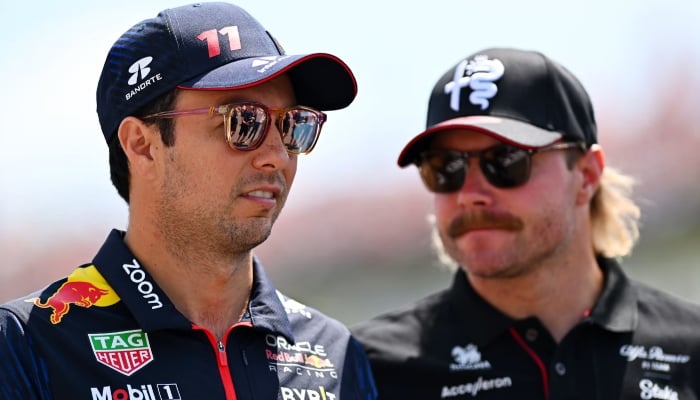
Instead of ten, the 2026 grid will see 11 teams next year, as Cadillac, backed by US car giant General Motors, will join the teams.
The Cadillac line-up will include ex-Mercedes driver Valtteri Bottas and former Red Bull driver Sergio Perez.
Briton Graeme Lowdon, who has previously worked for former F1 teams Virgin and Marussia, will be team principal.
The American team will purchase and use power units from Ferrari for their first three seasons, with their own GM-developed engines set to arrive for 2029.
New names on the grid
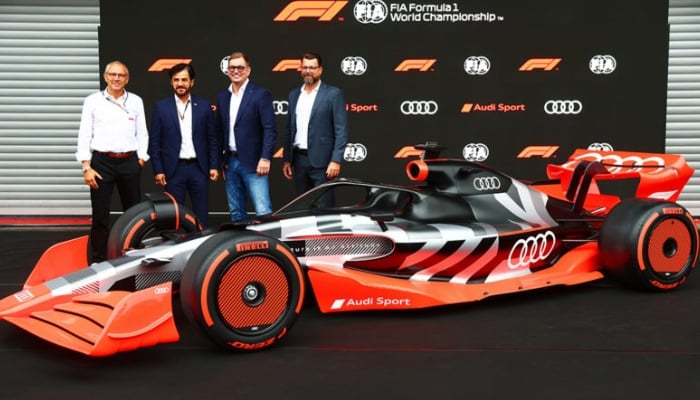
Alongside Cadillac, there will be another new name on the grid, Audi, who has taken over the Swiss-based Sauber team, who finished ninth in the 2025 constructors' championship.
Audi is designing an engine for its entry, which coincides with the introduction of the new power-unit regulations.
Jonathan Wheatley will be team boss and work alongside former Ferrari principal Mattia Binotto, who is head of Audi's F1 project.
German driver Nico Hulkenberg and Brazilian Gabriel Bortoleto, Sauber's driver pairing in 2025, will be Audi's maiden line-up.
Changes in the 2026 F1 Calendar
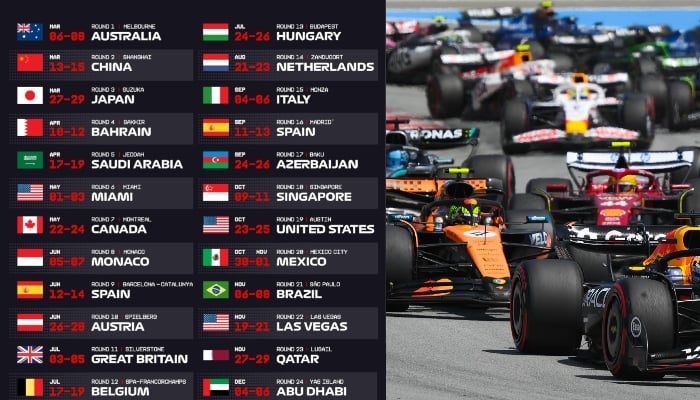
The F1 calendar is once again 24 races, starting in Australia in March and ending in Abu Dhabi in December, but there will be two trips to Spain instead of one next year.
The Spanish Grand Prix will be held on a new circuit in Madrid and effectively replaces the Emilia-Romagna Grand Prix in Imola.
It will be held from September 11 to 13, as the final race of an uninterrupted European leg of the season.
Barcelona remains on the calendar and is now known as the Barcelona-Catalunya Grand Prix, taking place June 12 to 14.
Canada's race weekend switches from June to May 22 to 24 so it can take place in the same month as the Miami Grand Prix, which is pencilled in for the first weekend of May.