![]() |
![]() |
![]() |
![]() |
| |
|
|
Editorial overview Plan
of action support Legal
recourse and more Popular
disbelief
Most of the
journalism we do in this country is statistics-driven. Unfortunately, in our
context, the statistics often indicate bad news. On most days, the number of
people killed is what determines the headline and its placement. The number
of drop-outs and out of school children is the statistic when we choose to
discuss education. And so on. The scale of our
misfortune is boundless, it seems. Here, often times in recent years,
journalists have become news themselves. That too starts with a statistic
— 83 journalists killed since the year 2000. This is now indeed a
specialised area; those who are looking at this dangerous trend have come up
with region- and year-wise breakup of data. The details are scary. They
become scarier when one realises the extent of impunity regarding crimes
against journalists. This is the subject of
today’s Special Report. Intermedia Pakistan, a national advocacy, research
and training organisation is not just involved with compiling the statistics
but is actively pursuing an agenda, along with the international community
which is equally concerned about “the scale of impunity against
journalists”, to develop a national plan to combat it. We at TNS therefore
requested the Intermedia to help us share the details behind this horrendous
statistic that concerns us basically. But it is not just about us; the
crimes against journalists are a reflection of the society we are shaping.
They clearly involve the state, in preventing this from happening and in
providing assistance, legal recourse etc. There are a host of issues
discussed here in all the reports but one thing which remains hazy is the
charge that journalists become vulnerable when they cross the ‘red
line’. What is a ‘red line’ for a journalist in Pakistan? Does that
mean that she is not performing her duties professionally and is giving
one-sided reports? Or does it mean that she is venturing into areas that
fall into the ‘national interest’ domain, which essentially is dominated
by one institution? In either case, are we
trying to say that the journalists who cross the red line deserve nothing
less than death? Are we saying these 83 journalists lost their lives because
they were careless and hence deserved to die. This perhaps is too harsh
a judgment, even when conceding that the media houses share a responsibility
to train and equip and protect their staffers in the best possible way.
overview By now nearly all
related stakeholders — including the national and international
communities – have a decent idea about the scale of impunity against
journalists in Pakistan. We all know, for instance, that reporting is a
tough job in Pakistan. The country has been rated the most dangerous place
to practise journalism on the planet for two years running — 2011 and 2012
— by Reporters Without Borders. On the issue of impunity
against journalists, the right to exercise freedom of expression, indirect
censorship offline and direct censorship online, the country has also
consistently ranked amongst the worst performers on these subjects on annual
indices of organisations such as the Committee to Protect Journalists,
Article IX, Freedom House, etc. Looked at from any angle,
the scale of impunity against journalists in Pakistan is staggering.
According to data provided by the Pakistan Federal Union of Journalists (PFUJ)
and Intermedia Pakistan, over 2,000 journalists have experienced harassment,
intimidation, kidnap, arrest, detention, assault and injury since January
2000. That’s an average of 166 cases every year for 12 years, or 6 cases a
month. In the same period, the number of journalists verifiably killed
through specific targeting or those who lost their lives in deliberate
terrorism-related violence (such as suicide attacks and bomb blasts) while
out in the field reporting — in other words, killed in the line of duty
— is at least 83. That in itself is an average of 7 journalists killed
every year since 2000 or one every two months. Breaking down the 12-year
period under review into the first seven years (2000 to 2006) and the last 5
years (2007 to 2012), the statistics become more menacing. During 2000 and
2006, a total of 18 journalists were killed at an average of 2.5 every year
or one about every 5 months. In the last 5 years — from 2007 to end 2012
— the number of journalists killed shoot up to 65. That’s 13 every year
or, staggeringly, one every 28 days. The statistics tell
another story when seen in the context of killings every year and regions
where the journalists were killed as well as the ways in which they were
eliminated. During 2000 and 2007, the worst year for journalists was 2005
when 5 were killed while 4 each were eliminated in 2003 and 2006. But from
2007 to end 2012, no less than 9 have been killed each year with 13 losing
their lives in 2007. At least 12 each were killed in 2010 and 2011 and 9
each in 2009 and in the first 11 months of 2012 while 10 were killed in
2008. The statistics, compiled
by Intermedia Pakistan, also show that contrary to belief, Sindh is the most
dangerous territory in Pakistan to practise journalism with 23 killed in 12
years, including 17 in the last 5 years. The second worst place to be a
journalist is Khyber-Pakhtunkhwa with a total of 18 killed in 12 years (14
in the last 5) with a close third being Balochistan with 17 journalists
killed since 2000. But when measured for the last 5 years (2007-12),
Balochistan has been the worst place to be a journalist in Pakistan with all
17 killings coming in these 5 years. The Tribal Areas (Fata) and Punjab are
tied for the fourth worst place to practise journalism with 11 killings each
— most in both cases occurring in the last 5 years. Gilgit-Baltistan and
Azad Kashmir seem to be the safest places in Pakistan journalism-wise, with
no killings (of journalists) recorded there. Even Islamabad ‘scored’ 3
killings. It is also telling how
these 83 journalists were killed. No less than 63 were sought out and shot
dead in cold blood. Which means that in four-fifths of the killings, the
work of these journalists massively upset the actors who killed them. Of
those eliminated, 12 journalists were abducted before being killed and their
bodies dumped to be found to serve as warnings. At least 5 of these were
brutally tortured in captivity before they were killed. Two were beheaded
and one hanged. At least 10 journalists were killed in suicide attacks while
they were out reporting on assignment and another 4 in bomb attacks. While
these 14 were not direct targets, their killings demonstrate the violent
environment in which they work and which poses a major risk to journalists
in the field. At least one was target-killed in a bomb attack with his car
rigged with explosives designed to go off when he opened it to drive. The one common thing that
ties the killings of ALL these 83 journalists save one (Daniel Pearl) is
that their killers have never been found, prosecuted or punished. This is
called impunity. “Exemption or freedom from punishment, harm or loss”
— the definition of impunity. Not the state, not the media organisations
they worked for and not their families have been able to pursue justice,
which allows for the killings of journalists — and non-fatal but dangerous
and disturbing intimidation and harassment — to go on unabated. How can this impunity
stop? Through a variety of actions and approaches as outlined in other
stories of this Special Report in these pages. However, without invoking the
legal process, impunity cannot begin to be scaled back. Most journalists
killed come from lower income backgrounds because of which after they are
killed their families cannot pursue the vagaries of expensive and confusing
justice system. And because most of these journalists are not formal,
full-time or contracted employees, their media organisations don’t see
them as “their” employees and, therefore, don’t pursue justice for
them. As for the state — its larger political problems and eroding
capacities means it is not pushed when the families and employers don’t,
or can’t, be bothered. The minimum solution is a
legal aid mechanism and a safety fund for journalists that can step in as
interim measures, for starters, and then become institutionalised.
Intermedia Pakistan already runs a safety fund that offers a variety of
assistance — from medical aid to counselling and from financial aid to
families of journalists killed to relocation in-country for journalists
under threat. It is now also launching a media legal aid programme to
formally start legal challenges against impunity by taking up cases of
journalists in distress in courts through a cadre of lawyers trained in
media defence. These are small parts of efforts that are assuming a national
profile through an alliance on safety being established and which will soon
assume international dimensions when the UN Action Plan on Impunity Against
Journalists is launched in Pakistan in early 2013 as part of a global pilot
programme in 5 countries. Adnan Rehmat is Executive
Director of Intermedia Pakistan, a national advocacy, research and training
organisation. He is a development communications specialist and an analyst
on media and political issues Journalists killed —
geographic and yearly breakdown Year
Balochistan KP
Punjab
Sindh
Fata
Islamabad Total
2000
-
-
-
1
-
-
1
2001
-
-
1
-
-
-
1
2002
-
-
1
1
-
-
2
2003
-
1
-
3
-
-
4
2004
-
1
-
-
-
-
1
2005
-
1
1
-
3
-
5
2006
-
1
-
1
1
1
4
2007
-
2
-
8
1
2
13 2008
3
3
2
1
1
-
10 2009
1
4
3
-
1
-
9
2010
4
1
1
2
4
-
12 2011
4
3
2
3
-
-
12 2012
5
1
-
3
-
-
9
17
18
11
23
11
3
83 Source: Intermedia
Pakistan Journalists killed –
types of killings Nature of death
Number of journalists
Shot dead (killed at close
range/target killed)
62 Abducted before being
killed
12 Tortured before being
killed
5
Beheaded 2
Hanged 1
Killed in a suicide
bombing while reporting
10 Killed in a bomb blast
while reporting 4
Killed in a targeted car
bomb blast
1
Source: Intermedia
Pakistan
Plan
of action If journalists in
Pakistan and the media they work for are under attack, as the screaming
statistics show, what would constitute a desired response mechanism that can
combat this impunity meaningfully and effectively? What can help is a
combination of individual responsibility on the part of media practitioners
and media houses on the one hand and a determinedly collaborative approach
on the other hand by key stakeholders ranging from the state to the civil
society and an alliance between national and international communities. The key to combating
impunity against journalists in Pakistan is consensus and an action plan
that identifies both principal stakeholders and their respective roles and
responsibilities that can launch a series of actions that constitute both a
pre-emptive regime and a reactive response. This consensus and a clearly
defined roadmap have already emerged through two landmark initiatives in
November 2012. The first one was by the
United Nations through their UNESCO office in Pakistan that held a national
consultation that produced a declaration outlining recommendations on
combating impunity from key stakeholders, including the state, parliament
and media that was then taken to the second UN Inter-Agency Meeting on
Impunity in Vienna the same month. The second was at a
national conference on developing a roadmap to combat impunity attended by
key media representative associations including All Pakistan Newspaper
Society (APNS), Council of Pakistan Newspaper Editors (CPNE), Pakistan
Broadcasters Association (PBA), Pakistan News Agencies Council (PNAC),
Pakistan Federal Union of Journalists (PFUJ), All Pakistan Newspaper
Employees Confederation (APNEC), Pakistan Association of Independent Radio
Stations (PAIRS), Ministry of Information & Broadcasting and press clubs
and regional union of journalists from Karachi, Lahore, Peshawar, Quetta and
Islamabad. The UNESCO consultation
declaration outlined recommendations that are likely to become part of the
UN Action Plan for Pakistan on Impunity Against Journalists effective 2013.
Among others, it seeks “firmer commitment from the Government of Pakistan
towards the issue of impunity and security of journalists and for concrete
and continuous actions towards developing enabling legal frameworks,
reviewing and implementing existing laws, building more robust prosecuting
mechanisms, and strengthening relevant national policies.” It also calls
for “more effective, inclusive and coordinated
initiatives by the UN System, including continuous monitoring and
reporting of the implementation of the UN Security Council Resolution 1738
on the safety of journalists in conflict and an end to impunity” as well
as urges the “One UN in Pakistan …..to mainstream this issue into its
developmental and humanitarian activities in 2013 to 2017.” The conference, in a
signed declaration, formally outlined a National Action Plan to Combat
Impunity that puts an emphasis on a collaborative approach. This plan also
offers a role model for implementation in the other four UN Plan of Action
countries and found wide backing at the UN conference in Vienna. The
outcomes of the national consultation offer the surest bet yet to
effectively combat impunity and increase protections for Pakistani
journalists. caption The scale of impunity
against journalists in Pakistan is staggering.
support Abdul Haq Baloch,
a TV reporter and general secretary of Khuzdar Press Club in Balochistan,
was shot dead by unidentified men on September 29, 2012. The worst part of
the story was that he had been threatened for several weeks before his
murder. He had also intimated the district administration, the management of
his media group and the Pakistan Federal Union of Journalists (PFUJ) about
the threats, but could not avert the situation. A majority of the
journalists killed (motive confirmed) in Pakistan during the last two
decades were aware of the level of threat they had got, yet they failed to
help themselves. For instance, Hayatullah Khan, a journalist from North
Waziristan who was kidnapped in January 2006 and found dead six months
later, is known to carry AK-47 when he was out reporting. Iqbal Khattak, a
Peshawar-based senior journalist and the Pakistan representative of
Reporters Without Borders, says that in most cases the journalist fail to
gauge the level of threat. “Journalists [in Pakistan] hardly take risks
into consideration when they are out to report. Simple, pre-cautionary
measures can minimise the threat level by 50-60 per cent,” he says. “If you look closely
into the murder cases of journalists in Pakistan, you would find that at
least in 60 per cent cases they crossed the red line knowingly or
unknowingly. It is mainly because they were never trained how to handle
certain situations and avoid one-sided stories. Most of them were not even
trained how to keep a professional interaction with different parties in
conflict areas,” he says. Khattak believes that both
trade unions of journalists as well as the media houses should sit together
and think up a solution. “Media houses should understand that productivity
of journalists is badly affected if they are working in constant fear. The
PFUJ and media owners are required to develop a general safety procedure as
soon as possible.” The significance of “red
line” varies from region to region, says Rahimullah Yusufzai, a senior
journalist based in the conflict-ridden Peshawar. “For conflict areas,
even reporting facts would tantamount to crossing the red line for some
stakeholders. It is too hard to report in these regions.” Conversely, he says, if
the journalists take care of the so-called “red line” (while reporting),
they cannot do journalism.” Yusufzai believes that a
lot of young people who have come into journalism in the last few years like
to exercise caution. “In most cases, the attackers give warnings to their
targets and the intelligence agencies give signals of displeasure, but the
journalists wouldn’t take these lightly. “It hardly helps to
share information with their media outlets. Only some international media
houses can facilitate relocating the threatened journalists; the local media
houses generally show care for the threat level. Journalists working in
conflict zones need to understand that they are on their own,” he
declares. Balochistan where recently
two press clubs — Khuzdar and Panjgur — have been shut down because of
security issues is seen as among the most dangerous region. “Most
journalists working in interior Balochistan not only lack training and
education but also exposure. They are unsafe but still cross the red line
out of excitement. They need to understand that the militant forces, whether
religious, sectarian or nationalist, have not spared the security forces
too. They only need proofs to attack the journalists. While on the other
hand, the intelligence agencies have their own definition of national
interest,” says Shahzada Zulfiqar, a Quetta based journalist and former
president of the Balochistan Union of Journalists (BUJ). According to Zulfiqar,
over the years the militants have become “more media conscious. Threats
and attacks can be reduced to some extent by adopting a professional
approach and doing impartial and unbiased reporting.” He adds that the role of
media owners and the PFUJ becomes too important in the training of
journalists especially those coming from rural areas. “Trade unions have
been weakened over the years while media group owners are not interested in
ensuring the security of their workers. I have never seen any media
organisation arrange training sessions on reporting in conflict zones.” The journalists are also
not insured. A few months back, a photojournalist of a leading Urdu
newspaper was injured in an attack while covering an event and had to be
admitted in hospital. “His paper, instead of providing him medical
facility, deducted his five days’ (spent in hospital) salary,” says
Zulfiqar. He also says that
journalists are often caught between competing power centres. “The
Balochistan High Court recently directed journalists not to report news of
banned organisations. On the other hand, these [banned organisations] exert
pressure on local media to give them ‘proper’ coverage.” Safdar Hayat Dawar,
President, Tribal Union of Journalists, says that journalism has become too
tough a profession over the years. “Journalists are the sole means of
information in many parts of troubled tribal areas of Pakistan but many of
them have left the profession because of security threats. The ground
realities have also changed in tribal areas as war lords and other
stakeholders understand the importance of media and try to use it against
their enemies.” Pervaiz Shaukat,
President, PFUJ, says that to ensure the protection of journalists in a
country where the security forces are not safe is no child’s play. The
PFUJ has been striving to train journalists and enable them to work in the
face of threats. “We need to fight the menace of breaking news,” he
insists. “It forces journalists to take undue risks. “Over the last few
years, we have helped 25 journalists who were under threat, to relocate to
safer places for a period of about two months.” He also stresses on the
need for unity among ranks of journalists in tackling the problem. “We
lack it badly. Believe me, in the Saleem Shahzad case, the journalist
community wasn’t forthcoming in helping the commission established to
probe the murder.” We are ready to sit with
the Pakistan Broadcasters Association (PBA) and the All Pakistan Newspapers
Society (APNS) to formulate standard operating procedures (SOPs) for
journalists’ security. “But in a country where it took 12 years to get
wage board implemented, you think it would be easy to convince the owners to
provide for the security of journalists? “It is ironic that
camera, technical equipment and Digital Satellite News Gathering (DSNG) vans
are insured but the cameramen and reporters using these gadgets are not. It
speaks for the owners’ interest in the protection of their workers. “The journalists should
never report in conflict zones without having taken proper safety measures,
though a lot of them don’t even care about these things,” says Pervaiz
Shaukat. caption Unity among the ranks of
journalists in tackling the problem is the need of the day.
Legal
recourse and more Since 2000, over
80 journalists have been killed, hundreds threatened, harassed, intimidated,
abducted and attacked. Most of the cases go unregistered, and investigations
for those that can even boast the basic FIR, are endlessly and sometimes
deliberately delayed and perpetrators roam free. So, what is the reason
behind the lack of legal follow-up of journalist murders? “In case of a
journalist’s killing, unless the family comes and charges a particular
person, our criminal justice system completely fails. If the family of a
victim nominates an accused, there is a chance of some investigations but
otherwise none,” says Kamran Arif, a prominent lawyer and co-chair of
Human Rights Commission of Pakistan (HRCP). Journalist unions express
similar helplessness. Amin Yousuf, General Secretary, Pakistan Federal Union
of Journalists (PFUJ) says, “It’s impossible to get legal support in
cases of threats and killing of journalists. Investigation and prosecution
aside, not even an FIR has been registered in some cases. We have no legal
protection at all. We have no resources to pursue the cases of slain
journalists in the courts.” Activists working on
journalist safety issues have often lamented the lack of a supporting legal
framework that allows journalists’ murders to be properly investigated.
PFUJ also holds the same position: “We have no legal resources to pursue
the cases of slain journalists in courts. What we need is a network of
trained lawyers to help us reopen investigations and cope with regular
proceedings.” Saif-ul-Islam Saifi,
President, Peshawar Press Club, deals with the reality of threats to
journalists on daily basis. His province Khyber-Pakhtunkhwa is notorious for
journalists being targeted. According to Saifi, “The current legal
mechanisms and laws are not effective. The situation will not improve unless
special measures are taken. There is a need for legislation for
journalists’ safety without the usual complexities of current laws and the
draft bill has to be prepared with all stakeholders on board.” A special law to protect
free journalism is not a new concept. Multiple high-risk countries have
experimented with different models of designating a special prosecutor for
journalist killings. Among the most recent examples is Mexico. A high risk
region for journalists, Mexico, has recently federalised crimes against
journalists and introduced laws to protect journalists/human rights
defenders and a Special Prosecutor’s Office for Crimes against Free
Expression (FEADLE). But while the Mexican government has been swift in
introducing new mechanisms, international watchdogs have termed them
‘inadequate and ineffective’. Can a similar model work
in Pakistan? Kamran Arif of HRCP remains sceptical. “Prosecutors in our
scheme of things don’t make a lot of difference; it’s the investigation
which has to be almost completely in the hands of police. Part of the
problem is a lack of will, but it’s also their lack of ability to
investigate. The government has to be serious about it. There might be
special investigators for killings but a special prosecutor might not be
that effective,” he explains. The futility of special
measures for investigation and prosecution in the current set-up in Pakistan
has been highlighted in the past. Hayat Ullah case is one example. “A
high-level commission was formed to investigate his killing but its report,
even after some years of its completion, has not been made public yet,”
says Saifi. The constitution of a
special investigative commission to investigate the more recent Saleem
Shahzad’s murder was touted as a giant step forward. However, the report
did not go beyond hinting at a possible involvement of intelligence agencies
but did not charge anyone in particular. Interior Minister Rehman Malik has
often made public promises to the media to investigate journalists’
killings but has yet to deliver. It would appear that rather than a lack of
legal procedures to conduct the investigation, it is a lack of political
will that is creating a hindrance in a legal follow-up of threats to
journalists. Safdar Dawar, President,
Tribal Union of Journalists, expresses concerns about the government’s
commitment towards the cause. “In FATA, all governance systems are weak
except for state agencies. It’s not in the interest of the government to
investigate cases of targeting journalists, for they will prove either the
incompetence of security forces or the involvement of agencies
themselves,” he says. Looking at the
perspectives of journalist leaders and human rights defenders one can
conclude that while having a special law for journalists might be one of the
options but till we get there, the investigations and prosecution has to be
done within the mainstream legal system. As Kamran Arif puts it, “We need
to strengthen and make functional what is already there through resource
allocation and determination of government to solve these cases.” Asad Baig works as a media
and communications specialist
Popular
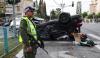
disbelief On November 25,
2012, one of Pakistan’s best known journalists Hamid Mir escaped an
assassination attempt when an IED (improvised explosive device) rigged to
his car was discovered and defused. The next day, Tehrik-e-Taliban Pakistan
(TTP) claimed responsibility for planting the explosive and vowed to make
another attempt to kill him. In a country where over 80 journalists have
been killed since 2000, the threat to Mir couldn’t get any more real.
However, the public reaction to this life attempt was suspicion at best. Ali Imran, a cab driver in
Islamabad, laughed outright when asked about the incident. “Bas mashoor
honay kay liye tamasha hai,” he said, adding “everyone knows it is a
drama; the so-called bomb was a trick to make people realise how important
he is.” On social media, the
public reaction to the news also reflected less than acceptance at face
value. Dozens of netizens raised questions about the attempt on his life.
Yet others on the fringes linked him to RAW and CIA or accused him of
“working against national interest.” While there were many expressing
solidarity with Mir, just as many were adamant that the attempt was never
real. Hamid Mir is not the first
journalist to have faced such public reaction after a life threat. In 2010,
when The News reporter Umar Cheema was kidnapped and tortured, he faced a
similar public reaction. When Saleem Shahzad was murdered, there were dark
rumours of him ‘having crossed the line’ thus ‘asking’ for a violent
end. Judging by the public reaction in most high profile journalist murders
and attacks, it appears that blaming the victim is still the name of the
game in Pakistan. Senior journalist Absar
Alam links the tendency to doubt the threats to journalists to the culture
of conspiracy theories. “As a society we have started believing in
conspiracy theories. Take any issue, not only the issue of threats to
journalists; talk about the attack on Malala, people think this is a drama.
Talk about killing bin Laden — people say the same things. So, whatever
happens in Pakistan, people think it is a conspiracy.” The tendency for
widespread disbelief even when explosives have been found on a prominent
journalist’s car raise serious concerns about the credibility of media.
Some believe that multiple exposes and scandals of some prominent media
personalities have discredited the media further. Saleem Shahid, the former
President of Balochistan Union of Journalists, says that people in
Balochistan are now getting more curious about how the journalists operate.
“When a journalist dies in Balochistan, the public offers sympathy, but
now the people have also started asking a lot of questions. And, if a bomb
is found at a newspaper or a TV office that hasn’t exploded, people react
with disbelief. They see it with suspicion and are not convinced that the
threat was real.” One of the reasons for
this disbelief in the reality of threats to media may be the prevailing
impunity. Despite the killing of 83 journalists, not a single criminal has
been prosecuted and punished. In such circumstances, the public is drawn to
fantastical explanations to satisfy their curiosity. Says Absar Alam: “If the
criminals who have killed the journalists are caught, then people will also
know this was not a drama. It was real. And somebody was behind it. That is
why enforcing the law and ensuring an end to impunity is more important in
our case.” If Alam’s argument
holds, it is also a threat to the credibility of the media. Worse, it
encourages more attacks against the media and a rise in impunity. Unless the
state starts investigating the ghastly killings of journalists many are
likely to continue dismissing the threats to journalists’ life as
“drama”, failing to acknowledge that an attack on journalists is not
just an attack on media but an attack on the society’s fundamental right
to freedom of expression. Sadaf Baig is a blogger,
digital media activist and analyst on media issues caption While there were many
expressing solidarity with Mir, just as many were adamant that the attempt
was never real. UN
aid The Committee to
Protect Journalists in 2012 named 12 countries — including Pakistan, Iraq,
Russia, the Philippines, Afghanistan and Mexico — in its annual
“impunity index” because they allow deadly violence against the press to
go unpunished, calling for a global agenda to shape up around the growing
concern of nations around the globe to address this problem collectively. A pressing need has
emerged for the United Nations to develop a single, strategic and harmonised
approach in order to have a greater impact on this issue recognising that
the killing of journalists impacts the UN system and hampers its efforts
made towards development and human rights. In recognition of this
background, on April 13, 2012, the UN Chief Executives Board endorsed the UN
Plan of Action on the Safety of Journalists and the Issue of Impunity, with
the objective of “working towards the creation of a free and safe
environment for journalists and media workers in both conflict and
non-conflict situations, with a view to strengthening peace, democracy and
development worldwide.” Pakistan is one of the five pilot countries where
this Plan will be implemented. UNESCO as the specialised
UN agency mandated to promote freedom of expression at large initiated the
process of UN Plan of Action on the Safety of Journalists and the Issue of
Impunity in 2010 when the Intergovernmental Council of the International
Program for the Development of Communication (IPDC) requested
Director-General UNESCO to consult with member states on the feasibility of
convening an inter-agency meeting of all the relevant UN agencies. Consequently, the first UN
Inter-Agency Meeting on the Safety of Journalists and the Issue of Impunity
took place in Paris in September 2011. Representatives of UN agencies,
programmes and funds as well as international and regional institutions,
professional organisations, NGOs and member states met and drafted an Action
Plan to improve the safety of journalists and combat impunity, providing
recommendations to the UN family on the draft Plan. The measures in the UN
Plan include, among others, establishing a coordinated inter-agency
mechanism to handle issues related to the safety of journalists as well as
involving other intergovernmental organisations at international and
regional levels to encourage the incorporation of media development
programmes focusing on journalists’ safety within their respective
strategies. The Plan also foresees the
extension of work already conducted by UNESCO to prevent crimes against
media workers. This includes assisting countries to develop legislation and
mechanisms favourable to freedom of expression and information and by
supporting their efforts to implement existing international rules and
principles. Pakistan due to its
credentials is one of the pilot countries for the forthcoming implementation
of strategy to combat the issues of impunity against journalists. On
November 5, 2012, the Islamabad Declaration on Safety of Journalists was
adopted by members of parliament, Human Rights Commission, media workers,
journalists and Press Clubs from all over the country, with special
representation from areas of conflict, to demand collective and coordinated
action from all stakeholders to stop the killing and harassment of
journalists and end impunity. Based on the adopted
declaration, a Pakistan specific draft implementation strategy was proposed
at the second UN Inter-Agency meeting held in November 2012 in Vienna,
identifying the roles and responsibilities of stakeholders. The purpose of
the meeting was to formulate a concrete UN Implementation Strategy on the
Safety of Journalists and the Issue of Impunity for 2013-2014. This means
putting in place a framework of actions to be taken during the next two
years in Pakistan. The upcoming UN Action
Plan for Pakistan seeks to promote a collaborative approach to protecting
journalists as a common value and shared ownership among policymakers, media
owners, regulatory bodies, press clubs, civil society and last but not least
journalist’s themselves to practice their right of speech with freedom and
security. Phyza Jameel manages the
Freedom of Expression and Access to Information Division of the
Communications and Information Sector at UNESCO Islamabad caption Pakistan due to its
credentials is one of the pilot countries for the forthcoming implementation
of strategy to combat the issues of impunity against journalists.
|
|