issue
Revised and improved
While one daughter has become widely known for getting her papers re-evaluated, TNS finds it a norm amongst many sons and daughters studying for a degree in medicine
By Aoun Sahi
A student of Lahore Medical and Dental College (LMDC), appeared in the second professional MBBS supplementary examination 2006, held in March 2007 under roll number 431 (registration number 2001-LMDC-2272-UHS) and was conducted by the Unversity of Health Sciences.The result was announced in the second week of April, according to which the student she failed in Pathology and Microbiology, securing three marks less than the pass marks. The student applied to University of Health Sciences for rechecking of the paper on April 18, 2007.

Voice of the people
A comparison of our parliamentary system with those in vogue elsewhere
By Nadeem Iqbal
"The Parliament is supreme" seems only a cliché until the parliamentary committees system in the legislatures are not functioning as pro-active channels of effective legislative, as overseers of the executive and fully empowered to exercise the powers to summon persons, papers, records, witnesses and evidence from the executive branch, including officials.
The Inter-Parliamentary Union in its guide to good parliamentary practice says that crucial to the effectiveness of committee investigations is the power to require ministers and civil servants to appear and answer questions and to produce relevant documents, Hence access to information is a key to effective accountability including access to classified information. Open public hearings on issues of public importance have also worked to enhance citizens' confidence over their representatives.  

Taal Matol
Wedding syndrome!
By Shoaib Hashmi
It is the wedding season and I hate to sound grumpy but I have weddings coming out of my ears. I have spent weeks attending three weddings a day and that does not include the ones whose invites have got mislaid or lost. All the night invites are for eight-o-clock, and then you get a discreet phone call telling you not to make a fool of yourself and turn up on time and embarrass the hosts who will still be in their toilets while the bride will be at the parlour and no one there to receive you. An invitation for eight means people will begin arriving at around ten.

militancy
Democracy at risk
By bombing a polling station in Swat, the Taliban have sent a strong message that they would avenge any action taken against them
By Rahimullah Yusufzai
By bombing the polling station in Shalbandai village in Buner district during the Dec 28 by-election for a National Assembly seat, the Taliban in Swat and their allies elsewhere sent a strong message that they would avenge every action taken against them by any community or organization. And it didn't bother them that they killed 44 people in revenge for the six Taliban who were sent to death by Shalbandai villagers last August.

Two days in Naudero
Benazir Bhutto's first death anniversary stirs up different emotions
By Amjad Bhatti
A bright sun was setting on the pale landscape of Garhi Khuda Baksh on 26 Dec, when I saw tearful crowds of mourners thronging to the family graveyard of the Bhuttos. Garhi Khuda Baksh, a small village of union council Naudero appeared wearing a thick veil of historical nostalgia knitted with a pride and prejudice. Many of the visitors were looking with a curious reverence at the narrow and unpaved streets of Garhi Khuda Baksh. "These streets have tirelessly received the dead bodies of much-adored leaders of the country," said one of the visitors while crossing over to the mausoleum.

RIPPLE EFFECT
Hating/loving India
By Omar R. Quraishi
People in this country have a love-hate relationship with India. Amir Khan, Shahrukh Khan and Saif Ali Khan are idolized in Pakistan and the justification – perhaps subconsciously – that they are Muslim. But also admired are people like Sunil Gavaskar, probably because in his commentary on cricket matches he is seen by many Pakistanis as being even-handed. The same goes for someone like Ravi Shastri though less for Navjot Sidhu (who is just plain annoying) and even less for Kapil Dev or Harsha Bhogle.


By Aoun Sahi

A student of Lahore Medical and Dental College (LMDC), appeared in the second professional MBBS supplementary examination 2006, held in March 2007 under roll number 431 (registration number 2001-LMDC-2272-UHS) and was conducted by the Unversity of Health Sciences.The result was announced in the second week of April, according to which the student she failed in Pathology and Microbiology, securing three marks less than the pass marks. The student applied to University of Health Sciences for rechecking of the paper on April 18, 2007.

The university authorities according to rules and regulations appointed two senior teachers of Pathology -- Professor AH Nagi of LMDC and Dr Fauzia Iqbal Butt of Allama Iqbal Medical College (AIMC) -- for pre-result assessment/audit of the result. Both teachers assessed her paper bearing factitious number 1558 and found there was no question or part of any question unmarked (according to UHS regulation for rechecking of answer books/awards, pre-result assessor can only award marks to an un-marked question or portion of question [Rule 7 section vii]) both in MCQ and SEQ papers. Dr Fauzia submitted her report to the controller examination UHS on April 30, 2007 while Dr AH Nagi submitted his on May 29, 2007.

Surprisingly, Dr Nagi submitted a new report to the controller on June 7, 2007 wherein he added three marks to the same paper. "The MCQs do not show any discrepancy and their total are [sic] also correct. No Qs [sic] is unmarked, however, the following marks are to be awarded to the question shown below" he wrote in the report on June 7, 2007. He identified that some portions of questions 8, 9 and 15 were unmarked. Therefore, he awarded one mark each to these questions and added them to the total, thus declaring her pass in the subject.

The LMDC administration conducted an inquiry into the matter. The assistant controller of examination of UHS, after examining all reports, wrote a note to the head of the rechecking committee. "The honourable Prof Dr AH.Nagi has clearly stated that 'No Question is unmarked' and yet he has amended marks to question 8, 9 and 15. This amounts to reassessment/re-evaluation [which] is against the rules and regulation of examination [Rule 7 section vii])".

On June 21, 2007 Dr Maleeha Aslam, convener of assessment in the subject of Pathology for the same examination, also submitted her assessment report to the controller examination UHS. She also declared that the paper bearing factitious number 1558 (along with 19 others) was checked correctly. "I did not find any discrepancy, however, in my opinion the marking was towards the lenient side," she wrote to the controller. The case was then referred to head of rechecking committee who on June 25, 2007 declared that increase in marks of factitious roll number 1558 could not be allowed. "The result of the candidate therefore remains unaltered."

Consequently, on June 26, 2007, the UHS issued an official letter to principal of LMDC to inform him that the paper of student- roll number 431 had no discrepancies. "This is to inform you that the Rechecking Committee has checked the Answer Books/Records/Practical Awards and no discrepancies have been found. Please convey the same to the candidate," read the letter issued with signature of assistant controller examination. Yet, surprisingly, on August 7, 2007, UHS issued a revised result card to student roll number 431 and declared her as having passed the examination.

TNS has come to know that the whole matter was in the notice of Vice Chancellor of UHS Professor Dr Malik Hussain Mubbashar, who has been heading the varsity for the last four years. He called Professor Nagi to clarify the ambiguity/discrepancy between the statement in the script and on the Audit report. According to the inquiry report, Dr Nagi apologised for his earlier statement on the audit report and rectified his mistake on the audit report.

One of the top officials of the UHS examination department confirmed to TNS that every year results of dozens of students of MBBS belonging to different colleges are revised after the declaration of the result. "In 2007, we revised results of 14 students after the declaration of results while in the past the number of such students used to be more than that," he told TNS. When TNS asked if UHS had ever issued a warning to paper checkers who leave unmarked questions or portion of question in a paper, he replied, "UHS has never issued a written warning to any paper checker so far but we have give them verbal warnings."

He was aware of the above-mentioned case and said, "It is right that Dr Fauzia recommended that no question or part of question of paper bearing factitious number 1558 was unmarked and there was no discrepancy in the marking. But Dr Nagi is a very senior teacher and that is why the university gave preference to his statement over Dr Fauzia's."

Interestingly, Dr Nagi is working as head of Pathology department UHS. TNS talked to him but he kept insisting that he awarded the three marks keeping all legalities in view.

The student-roll number 431 is not the only case whose result was changed by UHS officials after declaration of result. On May 6, 2008, then Director Gen Audit, Punjab wrote a letter to VC, UHS and attached a long list of MBBS/BDS students who had been declared pass in different subjects by UHS after the declaration of results in the recent past. He asked for the same favourable consideration of his son's case, who had appeared in BDS supplementary examination in early 2008 (copy of the letter available with TNS).

Spokesperson of UHS, Muhammad Atif, tried to clarify the VC's position. "He is not involved in any such activities and by the way everything in student-roll number 431 case was done following the legal course." Atif confirmed the official's letter to the VC, "but we did not declare his son pass because his papers were not up to the mark. The VC conveyed to him that his son could only pass by himself, and he (the VC) could not help him in this matter."

aounsahi@gmail.com


Voice of the people
A comparison of our parliamentary system with those in vogue elsewhere

By Nadeem Iqbal

"The Parliament is supreme" seems only a cliché until the parliamentary committees system in the legislatures are not functioning as pro-active channels of effective legislative, as overseers of the executive and fully empowered to exercise the powers to summon persons, papers, records, witnesses and evidence from the executive branch, including officials.

The Inter-Parliamentary Union in its guide to good parliamentary practice says that crucial to the effectiveness of committee investigations is the power to require ministers and civil servants to appear and answer questions and to produce relevant documents, Hence access to information is a key to effective accountability including access to classified information. Open public hearings on issues of public importance have also worked to enhance citizens' confidence over their representatives.  

Although repeated disruptions of the parliamentary democracy in Pakistan is one of the main reasons for the parliament for not establishing such traditions which can only be detailed through practice. It is also seen that the Pakistani parliamentarians are also not much trained to pursue this proactive course even when given space by the dictators.

This precisely has been the reason for the last national assembly for having five lacklustre years from 2002- 2007.

According to one study, the twelfth National Assembly met for an average of a little over 3 hours per day during its five years. A total of around 47,000 questions were asked in the National Assembly during 5 years out of which only about 10,000 or 21 percent were answered. During the first year of the National Assembly, most of its 43 committees were not constituted and during the combined 5 years period, these committees and their subcommittees, on an average, held 200 meetings per year. (The meetings of the Special Committee on Kashmir and the Public Accounts Committee are not included in the above number.) On the average each committee convened about 5 meetings per year.

The thirteenth National Assembly that came into existence after Feb 2007 elections so far could not leave any mark in this context as well as. Although 46 committees have been formulated, all of them are not fully functional as almost half of them have yet to elect their respective chairman.

The system has a good start when leader of the opposition Chaudhry Nisar Ali Khan was elected as chairman public accounts committee. Other important committees such as commerce, defence productions, education, environment, information, technology and telecommunications, narcotics control, ports and shipping, railways and textile industry have chairmen from PML-N, which can effectively look into the affairs of respective ministries.  

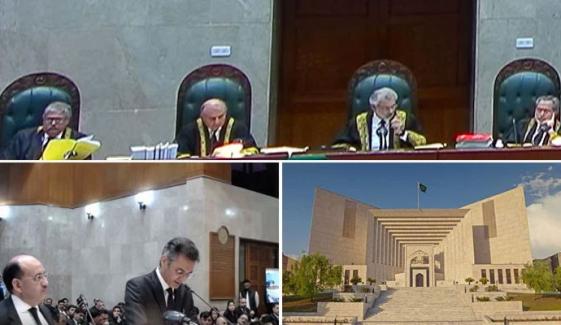
Recently one committee, which got prominence in the media, was the education committee, chaired by Ch Abid Sher Ali of PML-N that has been looking into the conduct of the education ministry with regard to the Chief Justice's daughter getting extra marks in violation of specified rules. The issue was perceived to have been heading towards a clash between the parliament and judiciary when a Supreme Court Judge debarred the parliamentary committee from discussing the issue early last month. But on Dec 19, a three-judge bench of the Supreme Court, had undone that earlier restraining order by a court judge. The bench observed that all the institutions were bound to function within their limits determined by the Constitution and law. The court also observed that each and every institution must function within its constitutional and legal framework.

Education Minister Mir Hazar Khan Bijrani, who is also ex-officio of the education committee, told the house that the majority of the committee had decided to wait until a decision by the Islamabad High Court, which has sealed the relevant record of the Federal Board of Intermediate and Secondary Education (FBISE) and set Jan 13 for the next hearing.

This is a test case for the 17-member education committee which has towering personalities and parliamentarians including Maulana Fazal ur Rehman , former foreign minister Sardar Assef Ali, former education minister Zubaida Jalal and a retired judge, Faharunisa Khokher. Almost all the major parties are represented in the committees which include seven from PPPP, four from PML-N including its chairman and three from PML-Q and one each from MQM, ANP and MMA. The committee's 12 members are female.

In Pakistan, the parliamentary committees can be categorized into standing, functional, house and special committees. The standing committees have wide powers of legislation, oversight, investigation and entertaining public petitions. The mandate of functional committees is limited. House committees only deal with the affairs of the house and library etc.

An important committee is that of on government assurances, which is to take out and scrutinize the assurances, promises, commitments, and undertakings of the government given by the ministers on the floor and regularly report the extent to which such assurances and promises have been implemented in time.

The public accounts committee undertakes an important function of examining the accounts granted by the assembly for the expenditure and annual finance accounts of the government and the report of auditor general.

The rules of the parliament say that senate and national assembly committee examine a bill or a subject or matter referred to it by the house or chairman/speaker and submits its report the house with recommendations.

It has also been provided in the rules that a committee may also examine the expenditures, administration, delegated legislation, public petitions and policies of the ministry concerned and it's associated public bodies and may forward its report of findings and recommendations to the ministry and the ministry shall submit its reply to the committees.

It is generally considered that oversight is only possible if committees are able to decide for themselves which aspects of government activity to investigate. Other parliaments have set examples such as Philippines House of Representatives, where aside from the House's Standing Committee on Oversight, the other committees of the House may undertake, on their own, a review of the performance of the government agencies pursuant to their authority to conduct hearings and inquiries on issues and concerns falling under their functional jurisdiction, upon the call of the majority of all their respective members.

The Indian Parliament has recently tightened up its procedure for following up recommendations by Departmentally Related Standing Committees (DRSCs), since it found the government often dragging its heels in implementing recommendations which it had itself accepted.

The New Zealand Parliament makes an open invitation for submissions to all interested parties, individuals as well as organisations, through the press and other media, including its website.

Other parliaments regard civic organisations or NGOs that represent speci?c issues or interests as the most appropriate vehicle for conveying the views of civil society.

While there is debate on if the proceedings of the committees should be open to media or will be subject to some rules, the international experience show that the activity of Parliament can be available to the citizens via several channels.

For most people, television, printed media and radio broadcasts are the primary channel of communication. Plenary sessions of the parliament are broadcast live on radio and television, while parliamentary sessions can be viewed also on-line on the Internet.

However, our parliament, which remains physically inaccessible to millions of people, has yet to devise any comprehensive communication and education strategy for ensuring greater public interest and involvement in its work to make it real public representative.


Taal Matol
Wedding syndrome!

It is the wedding season and I hate to sound grumpy but I have weddings coming out of my ears. I have spent weeks attending three weddings a day and that does not include the ones whose invites have got mislaid or lost. All the night invites are for eight-o-clock, and then you get a discreet phone call telling you not to make a fool of yourself and turn up on time and embarrass the hosts who will still be in their toilets while the bride will be at the parlour and no one there to receive you. An invitation for eight means people will begin arriving at around ten.

Then the waiting starts. The only activity required at weddings is the wedding food, which is cooked in a daig and is usually out of this world. So you spend the first fifteen minutes congratulating the bride's parents and saying hello to all the other vague acquaintances, most of whom you already met at the luncheon wedding earlier, so you have not much to say. Then you sit down to wait.

Usually your host sits you down next to an old schoolmate who has spent the last thirty years living abroad, does not know anyone here, but is deeply interested in finding out all about the old country -- only trouble there is blaring music playing and you can only catch every fifth word of what he says. He also lisps and is too polite to raise his voice above the music. The conversation is a bit strained.

It is a mystery to me why people think music, which you are not supposed to concentrate on, forms a good background to conversation. It is like being on a plane journey sitting next to a stranger who insists on making small talk, while the jet engines are blaring and you can hardly catch odd snatches of what he is saying. At weddings where all you have to do is talk, they insist on having live music, so you can't.

Then far away you catch sight of a vaguely familiar face desperately waving at you and trying to catch your attention. So you politely wave back which encourages him to come up and shake hands and ask, "Do you remember me?" Of course you don't; and so you say, "Of course I remember you!" He grins at you and says, "So tell me who I am!" I could kill him at the drop of a hat, but am instead desperately groping, and he starts dropping hints, "Remember we met in New York." I met a thousand people in New York. Just then someone comes to your rescue by calling him by his full name. Of course this could happen at any gathering, but right now it is happening at weddings. God help me!

militancy
Democracy at risk

By bombing the polling station in Shalbandai village in Buner district during the Dec 28 by-election for a National Assembly seat, the Taliban in Swat and their allies elsewhere sent a strong message that they would avenge every action taken against them by any community or organization. And it didn't bother them that they killed 44 people in revenge for the six Taliban who were sent to death by Shalbandai villagers last August.

The Taliban in Swat not only operate in their own district but also oversee actions of their colleagues and likeminded groups in neighbouring districts such as Buner. They control vast areas in mountainous Swat and possess sanctuaries where fighters and recruits, including potential suicide bombers could be trained and then sent on their missions. The Swati Taliban have strong links to militants in Bajaur Agency, where a sustained military operation has been going on since Aug 6, 2008, and in the adjoining Upper Dir and Lower Dir districts, where Taliban presence is not very significant. At a higher level, the Taliban in Swat are a component of the Baitullah Mahsud-led Tehrik-i-Taliban Pakistan (TTP).

The suicide bomber who struck at the polling station in Government Middle School, Shalbandai, hasn't been identified and would probably remain unknown. He could have come from Swat or may belong to Buner or some other place. But preliminary investigations show that the bomber had some local accomplices who went into hiding after the bombing. In fact, rumours are still circulating about the presence of handlers or accomplices of the Shalbandai suicide bomber in the area and villagers have been told to stay alert so that these men could be apprehended and prevented from carrying out another attack. Some of the rumours even mentioned the arrival of female suicide bombers in Shalbandai area.

Using tough language, the TTP Swat chapter deputy head Maulana Shah Dauran announced on his group's illegal FM Radio channel on the night of Dec 28 that the Shalbandai suicide bombing was carried out to avenge the killing of the six Taliban in the same village on August 13. He accused Shalbandai villagers of murdering "innocent" mujahideen, removing their clothes after having killed them and dragging their bodies in the village. He claimed to be in possession of a videotape containing footage of the desecration of the bodies of the six Taliban. Threatening further reprisals against Shalbandai villagers, he said revenge attacks would continue until each and every inhabitant of the village was eliminated.

The six Taliban killed in Shalbandai by the villagers included Commander Kamran, who belonged to Bakhshali village in Mardan district, and his teenage brother Danish. They were allegedly responsible for the murder of eight policemen at a post in Kingargalli village in Buner a few nights before their own slaying in Shalbandai.

Like every village in the NWFP, Shalbandai too has residents associated with various political parties. The Jamaat-i-Islami (JI) reportedly has a strong presence in the village, but the ANP and other parties also have committed workers and supporters in Shalbandai, which is located about six kilometres from Buner's district headquarters, Daggar. The TTP deputy leader Maulana Shah Dauran in his radio speech claimed that some political activists belonging to the JI, ANP, JUI-F and PPP were among those killed in the suicide attack. In his view, these men were involved in the killing of the six Taliban members and had, therefore, been justifiably dispatched to their death. The fact that he didn't even spare the Islamic parties and used harsh words for their workers showed the extent of the contempt that the radicalized Swati Taliban harbour for the JI, JUI-F and others who disagree with them. 

The suicide bombing was a heartless attack as it killed or injured everyone crowding in the camps of candidates and their political parties outside the school where polling was in progress. Riding a car that had been decorated with candidates' posters to avoid suspicion, the bomber ploughed into the crowd of voters and hangers-on to cause death and destruction. Only three of the dead were government employees, two being policemen. Four among those killed were children, three boys and a little girl. The 12-year- old Haider Ali was brought to Peshawar by her desperate mother and a helpful neighbour in the hope of saving his life. But the critically wounded boy succumbed to his injuries at the Lady Reading Hospital. His grieving mother's cries at the hospital saddened every person because Haider Ali was her only son. She kept cursing the Taliban for killing her innocent son. She also cursed politicians and asked as to what had her son and other victims of the suicide bombing done to deserve such a horrible fate.

Though the Election Commission has announced that repolling in the 11 eleven polling stations in Shalbandai and nearby Amnawar villages would be held on Jan 14, the villagers are in no mood to take part in voting after having experienced such a huge tragedy. A jirga of village elders has already decided neither to cast votes nor allow any polling staff to do its job. It is going to be a tricky situation for the Election Commission, which is required under the Constitution to hold assembly by-elections within 60 days. The by-election on NA-28 Buner is incomplete as the polling at the 11 stations had to be suspended after the suicide attack and several thousand voters would remain disenfranchised if the repolling wasn't held.

The unofficial count of the polled votes in 256 polling stations gave a lead of about 1,664 votes to the Jamaat-i-Islami candidate and former NWFP Assembly Speaker, Bakht Jehan Khan, over his closest rival, Istiqbal Khan, of the ruling ANP. He polled 29,350 votes against the ANP candidate's 27,686. The remaining seven candidates including those fielded by the JUI-F and PML-N were way behind and are out of contention. Even if repolling took place in the 11 polling stations in Shalbandai and Amnawar, it would be difficult for the ANP's Istiqbal Khan to overtake the JI nominee. A loss would be a setback for the ANP, which is in power with its coalition partner, PPP, in both the NWFP and the centre, and has won all bypolls since the Feb 18, 2008 general elections. It is also worthwhile to remember that the ANP had swept the last general elections in Buner by winning the lone National Assembly through Istiqbal Khan's father Abdul Mateen Khan and capturing all three provincial assembly seats. For the JI which boycotted the general elections, a win would bring it back into parliament and the political mainstream.

Though the outcome of the Buner by-election would have some political fallout, a more worrying aspect is the impact the suicide bombing at the Shalbandai polling station would have on voters and turnout in future elections. Already, turnout in elections in Pakistan is low and falling. The fear of the suicide bomber, particularly in the NWFP, would push the turnout further down and affect the representative status of the polls and the elected assembly members. Already, political rallies cannot be staged in most of the province, politicians move around with heavy security and the NWFP Governor, Chief Minister and ministers spend most of their time in their heavily-guarded official mansions. Interaction between the political leaders and the people has become minimal. Democracy would be the loser in such a situation and that is precisely one of the objectives of the militants and terrorists. This is the reason for them to bomb a polling station and kill everybody in sight. The idea is to terrorize everyone into submission.


Two days in Naudero
Benazir Bhutto's first death anniversary stirs up different emotions

By Amjad Bhatti

A bright sun was setting on the pale landscape of Garhi Khuda Baksh on 26 Dec, when I saw tearful crowds of mourners thronging to the family graveyard of the Bhuttos. Garhi Khuda Baksh, a small village of union council Naudero appeared wearing a thick veil of historical nostalgia knitted with a pride and prejudice. Many of the visitors were looking with a curious reverence at the narrow and unpaved streets of Garhi Khuda Baksh. "These streets have tirelessly received the dead bodies of much-adored leaders of the country," said one of the visitors while crossing over to the mausoleum.

Apart from the family elders, Zulfikar Ali Bhutto, Shahnawaz Bhutto, Murtaza Bhutto and Benazir Bhutto are buried in the under-construction hall shadowed by three white tombs. It was a struggle to possess the right place to worship within the mausoleum, Benazir's grave laden with fresh red roses, was surrounded by crying mourners, which included men, women and children. Everyone seemed in a hurry to touch Benazir's grave. Some people bowed their heads, while others kissed her grave. No one wanted to get aside unless others in queue pushed forward to be closer to Benazir's final resting place.           

A young Sindhi with a speech disorder, standing by the grave of Benazir Bhutto, stammered at the top of his voice, "Bibi ham sharminda hain." Before others could respond to him in chorus, "terry qatil zinda hain,"he started trembling with anger and disgust. Other mourners surrounding the grave took him away and consoled him with tears, but he became silent only when he fell unconscious.

"In popular perception, Bhuttos have gone beyond mere politics," said Mustafa Narejo, a PPP activist belonging to Naudero. "People of Sindh perceive the Bhuttos as the continuation of saints and Sufis of the land. Have you not seen people beating their chests on the grave? People interpret it as the re-incarnation of the tragedy of Karbala when it comes to associating with the Bhutto dynasty," added Narejo while wiping away his tears.

Women from the far-flung areas of Sindh reached Garhi Khuda Baksh to pay homage to their leader on her first death anniversary. "She is our shaheed rani, and I am her follower. I am ready to sacrifice my and my children's blood in her way," said a woman who came from Keti Bandar. 

On 27th Dec, Garhi Khuda Baksh turned from a tiny village into an overcrowded metropolis, people from all ethnicities, religions, sects and social classes came to pay their respects. People were chanting slogans, beating their chests, reciting requiems, singing mournful songs and keeping silent. "This graveyard is going to be the pilgrimage place for the natives in the times to come," predicted a mourner.

People had not just come to Garhi Khuda Baksh to pay homage to their martyred political leader rather they took it as a pilgrimage, it was just not for the sake of Benazir, it was also for the sake of one's own consciousness.

It seems that Benazir Bhutto's death anniversary will become a festival where visitors will come and quench their emotional thirst. I saw that it was not just the graveyard of a political family, the graveyard pulled people across the country, and it might turn into a mythical and mystical venue, which will develop a cathartic relationship with its followers. 

Naudero was sad and proud at the same time for hosting hundreds of thousands of workers, lovers and followers of the Bhutto legacy – a legacy of royalty, rebellion, suffering and martyrdom.


RIPPLE EFFECT
Hating/loving India

People in this country have a love-hate relationship with India. Amir Khan, Shahrukh Khan and Saif Ali Khan are idolized in Pakistan and the justification – perhaps subconsciously – that they are Muslim. But also admired are people like Sunil Gavaskar, probably because in his commentary on cricket matches he is seen by many Pakistanis as being even-handed. The same goes for someone like Ravi Shastri though less for Navjot Sidhu (who is just plain annoying) and even less for Kapil Dev or Harsha Bhogle.

Then there is the more recent phenomenon of Pakistani cricketers going to play 20/20 cricket in India and doing very well and making a lot of money in the process. In fact, when the Mumbai attacks happened, a couple of them such as Kamran Akmal and Sohail Tanvir, were in Mumbai -- since a T20 tournament was about to begin in early December. According to some reports in the Indian media, it is unlikely that these Pakistani players are going to be playing in any Indian T20 team any time soon --presumably the owners do not want to take the risk of making a costly investment and then seeing it backfire, given the volatile nature of subcontinental sports crowds.

Besides, sports people, many Pakistani musicians and actors have also ventured to India in recent years, lured understandably by its vast market and the fact that the language to a great extent is the same. The musicians have been helped by the fact that India's own contemporary music industry is pretty much non-existent and is dictated more by what's being commissioned by Bollywood music directors than by a mass audience. This is why perhaps in recent years Pakistani bands like Strings and musicians like Atif Aslam and Adnan Sami Khan have achieved major commercial success in India. The latter is in fact a British citizen and has renounced his Pakistani nationality, applying for an Indian one in the process. However, it remains to be seen what happens to his application in the post-Mumbai situation.

For his part though, Adnan Sami has of late become a punching bag (no pun intended, of course) for some in Pakistan who have angrily denounced his decision to renounce his Pakistani citizenship. This comes after the Mumbai attacks and after reports in some Indian newspapers that Adnan Sami was being harassed by certain elements that are either part of or allied with the Hindu right in Mumbai who were demanding that Bollywood directors stop hiring him for playback singing -- since, despite being a British passport holder, he was of Pakistani origin. It remains to be seen what happens to Adnan Sami's case but that of several other musicians is obviously clear for now – their vast market potential in India has come to naught, for now at least. And maybe that is what explains someone like Atif Aslam or Ali Azmat holding a concert in Karachi recently – because after all being professional musicians they have to earn their living.


At the same time, there is a growing chorus, especially seen in the many letters that for instance this newspaper has been receiving since the Mumbai attacks, that people should stop watching Indian television channels and cinemas in Karachi and Lahore and other urban centres should stop showing Indian movies. The reason given is that since Pakistani musicians, artists, actors and even cricketers are apparently no longer welcome in India we should reciprocate in kind and stop watching their shows and movies. This reasoning and logic is however unmistakably flawed because it assumes that Pakistanis who watch Indian movies or television shows not for their own recreation and enjoyment but solely so that the Indian television networks and their Indian sponsors can earn money! Surely, nobody in their right mind would want to watch Dostana merely so that the Indian producer of that film gets his or her money back but because the film got good reviews. This is precisely why similar kinds of campaigns in the past to boycott western goods and services, such as after the invasion of Iraq or Afghanistan and driven by the same misplaced sense of patriotism and narrow-mindedness, have never really worked.

If people love their country then the sensible approach in such a situation is not to provoke the other side into a confrontation that is sure to greatly damage both sides  --and this meaning death and destruction on a massive scale --but to calm nerves and tempers and refrain from doing anything that may be perceived as jingoistic. To those who consider such a reaction as a sign of weakness, the answer is that avoiding a war which will kill thousands, if not more, and push back both opponents by decades if not centuries and impoverish millions more is not a sign of weakness or illogic -- it is in fact a sign of having acted with wisdom and courage, especially since the latter is something that is often needed to go against the grain and do something that runs contrary to popular opinion.

In fact, this is the time that we also need to be wary of those (and there are many of them in our midst) who want to use such instances/occasions to act as our moral police --telling us what we should and should not be doing, watching, eating, wearing and so on. In fact that is another reason why war must be avoided because it provides a good staging platform among the particularly conservative, reactionary and retrogressive elements in societies to expand and strengthen their tentacles, especially since hating India (and of course America and other states and societies) is part of their larger project and allows them to come in a position where they are able to impose their ideology, their views and their worldview on the whole population (no wonder the Taliban are so eager to fight along side the Pakistan army in case of war with India!).


The writer is Editorial Pages Editor of The News.

Email: omarq@cyber.net.pk


|Home|Daily Jang|The News|Sales & Advt|Contact Us|


BACK ISSUES