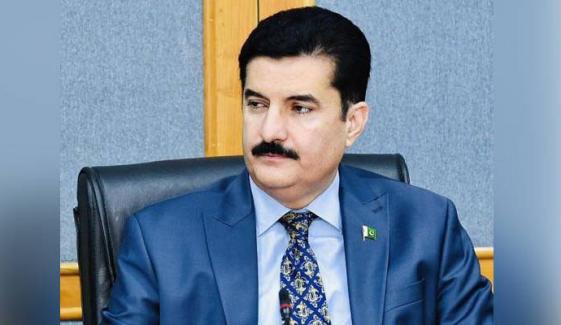
calculation
Election arithmetic
Construction of five possible scenarios with five major players for the forthcoming polls
By Adnan Adil
The general election, if and when it takes place, may result in a split mandate to the benefit of those who would be in a position to manipulate the emerging political scene. Given the current electoral strength, only an alliance of two main opposition parties, the PPP and the PML-N, has the potential of sweeping both Punjab and Sindh along with a sizeable chunk of the NWFP but that united front seems improbable for the time being.

review
The ultimate tone of Berlin
Lychee Lassi's performance in Karachi and Lahore was a bold blend of dub and funk, hip hop, jazz and soul, connecting perfectly with an audience at home with fusion of sounds and instruments
By Sarwat Ali
Lychee Lassi, a German group is named after an Indian restaurant -- Lychee Lassi being a mixed drink served as the metaphor for this music with fusion of several disparate elements all mixed in a blender yet tasting fresh. It was a bold blend of dub and funk, hip hop, jazz and soul -- not a cut and paste job on the computer like the majority of post-modern activity but intermingled with live improvisation.

Art of our time and taste
The paintings of Farrukh Shahab at the Croweaters Gallery Lahore are alluring in terms of their chromatic scheme, texture and mixing of diverse visuals -- albeit for immediate success
By Quddus Mirza
All that glitters is not gold in the works of Farrukh Shahab, currently on display at the Croweaters Gallery Lahore. Instead it is the golden pigment which the artist has smeared on his surfaces. The application of gold, seen in Shahab's paintings, is popular among other artists too. A number of individuals, whether painting landscapes, figure arrangements, abstract canvases or calligraphic works, incorporate gold leaves in their art pieces. A viewer can see works from well known artists to novices, who prefer gold either in their background or to construct main imagery.

Lambs and cows
Dear all,
Deadly attacks on PPP leader Benazir Bhutto's welcome rally in Karachi got front page display in the British press that you would expect of such an act to get. The failed assassination attempt not only killed over 140 people and injured more than 500; it shattered what we all could witness from the images in media was a brief flash of genuine people's power.


The general election, if and when it takes place, may result in a split mandate to the benefit of those who would be in a position to manipulate the emerging political scene. Given the current electoral strength, only an alliance of two main opposition parties, the PPP and the PML-N, has the potential of sweeping both Punjab and Sindh along with a sizeable chunk of the NWFP but that united front seems improbable for the time being.

In the election calculus of the country, Punjab's results hold the key to power in Islamabad. The party obtaining highest number of seats in the Punjab province is more likely to form the government in the centre.

Of the total 272 general seats in the National Assembly.Punjab has 148, Sindh has 61 seats, NWFP, 35 and Balochistan, 14. Federally Administered Tribal Area (FATA) 12 members and the Federal Capital has two seats. Out of the total 342 seats, 60 are reserved for women and 10 for non-Muslims. Indirect elections are held for reserved seats.

The NWFP and Balochistan have less number of seats and due to the fractured nature of mandate in these two provinces they may become a coalition partner but cannot assume a lead role in the formation of government in the centre.

Sindh too is divided in urban and rural regions with the PPP traditionally holding the majority in the rural areas and the MQM dominating the urban areas.

A party commanding a total of 172 seats in the national legislature is eligible to form the government in the centre. One interesting twist is that a party may win a simple majority on general seats (minus reserved seats) with 137 members but due to low presence in the provincial assemblies may lose reserved seats in the indirect election and thus fall short of simple majority in the lower house.

In 2002, the PML-Q bagged 118 seats while the PPP had 80. The third major player was the MMA with 59 seats and the fourth was the PML-N with 18 seats. The National Alliance had scored 16 seats and later merged with the PML-Q.

If the 2002 election results repeat themselves in 2008 with minor changes, there is a possibility that the PML-Q may emerge as the largest parliamentary group but short of simple majority. An alliance of PML-N, Jamaat-i-Islami and Imran Khan's Tehreek-i-Insaaf may get a few extra seats because addition of these groups would be helpful in first-past-the-poll system of election in practice. However, the appeal of PML-N, Jamaat-i-Islami, Imran Khan Alliance could also be limited to central and north Punjab and some parts the parts of the NWFP.

The PPP has the advantage that it can count on a solid chunk of 40 seats from interior Sindh. If it wins even half of Punjab it may get closer to the position of forming a coalition government. To form its own government, the PPP needs to win at least 85 plus seats from the Punjab alone which seems a distant possibility under the circumstances.

On the basis of past record and general observation, the assumption is that central and north Punjab are not going to return a large number of seats to the PPP which is likely to win more seats only in southern Punjab. If the PPP wins a thumping majority in south Punjab and interior Sindh, it still can't add up to a simple majority.

On the other hand, the PML-Q could win 85 plus seats in Punjab (with the use of state machinery and state largesse at its disposal), but even then it cannot gain simple majority at the national level due to its weak position in Sindh and NWFP. In addition to MQM it may require the support from some other smaller group or independents.

With PPP, PML-Q, PML-N, Jamaat-i-Islami and Jamiat Ulema-i-Islam as the five major players following five scenarios are being constructed, depending on their respective electoral strength and likely alignments.

Musharraf's Nightmare

Scenario: The PML-N Alliance (including the Jamaat-i-Islami, Tehreek-i-Insaaf and the ANP) and the PPP make an electoral alliance or have a seat-to-seat adjustment with each other. The PML-Q contests alone (Benazir Bhutto has already hinted at such a possibility.) Nawaz Sharif's party is undecided and probably divided on this issue. Benazir's image of being 'pro-US' and hobnobbing with the current regime are obstacles in the way of this union. PML-N fears it may lose its conservative voters support base by joining hands with Bhutto. Gen Musharraf's men would do their best to prevent the coming together of such an alliance.

Outcome: A PPP-PML-N Alliance if materialises has the potential to sweep the polls and form the government not only at the centre but in the four provinces.


Most Likely to happen

Scenario: The Benazir Bhutto-Gen Musharraf understanding runs into difficulties. The PML-Q and the PPP contest alone. The PML-N, Imran Khan's Tehreek-i-Insaaf and Jamaat-i-Islami forge an electoral alliance.

Nawaz Sharif is not allowed to return to Pakistan. Voters in Punjab are split in three parties, the PPP, PML-Q and PML-N led Alliance.

The PML-Q has state machinery (local governments, police and intelligence agencies) at its disposal. In the last one year, the PML-Q government has spent more than three billion from Punjab's kitty to project and publicise its 'achievements' in the media. The government is planning to dish out at least Rs 17 billion to union councils to carry out the development work on the recommendation of its candidates on the eve of general elections.

Outcome: PML-Q wins a large number of seats but falls short of simple majority. The PML-Q joins hands with MQM, ANP and JUI-F to form the government. The PPP wins majority of national seats in Sindh but sits in the opposition at the centre. It forms coalition government in Sindh either with small groups or with MQM.

American dream

Scenario 1: The understanding between Benazir Bhutto and Gen Pervez Musharraf remains in place. PML-Q contests alone. PML-N and Jamaat-i-Islami makes an electoral alliance. Nawaz Sharif is not allowed to return to Pakistan. The voters in Punjab are divided in three parties, the PPP PML-Q and the PML-N Alliance.

Outcome: In this case, the PPP emerges as the largest party because the divide of the anti-PPP vote in two parts would work to its benefit. Still it may fall short of a simple majority as happened in 2002 with similar alignments. If Musharraf regime leaves the PML-Q in lurch at the eleventh hour, it may further bolster PPP's position. The PPP joins hands with MQM, ANP and JUI-F to form the government.


Scenario 2: Former prime minister Nawaz Sharif manages to return to Pakistan and leads his party's election campaign. PML-N, ANP and the Jamaat-i-Islami make an electoral alliance. The PPP and the PML-Q contest alone.

Outcome: In this case, the vote is split among three groups. The PPP, PML-Q and PML-N Alliance win almost equal number of seats unable to form the government without the support of one major rival party. The PPP and PML-Q join hands or PML-Q and PML-N come together. Another possibility is that the PML-N sweeps Punjab but falls short of simple majority at the national level. It enters into alliance with the MQM or the JUI-F to form the government. It could be a favourite scenario for the right-wing elements in the establishment.


Muslim League wins the battle

Scenario: PML-Q and PML-N either form an electoral alliance or merge into each other. In a recent statement, Prime Minister Shaukat Aziz has hinted at such a possibility. The PPP contests alone. Old Muslim Leaguers including some influential Punjabi media people would aspire for this to happen.

Outcome: The unified PML emerges as the largest parliamentary group but falls short of simple majority because of defeat in Sindh and NWFP. It makes an alliance with the MQM and the JUI-F to form the government. The PPP sits in the opposition.


An unlikely outcome

Scenario: The militancy and suicide attacks worsen the law and order situation and Gen Musharraf makes his two allies, PPP and PML-Q agree to join hands. PML-Q and the PPP form an electoral alliance with each other or they do some sort of seat adjustment.

Outcome: The PPP-PML-Q alliance wins absolute majority or two-thirds majority. Both make a coalition government under the supervision of Gen Musharraf.


review
The ultimate tone of Berlin

Lychee Lassi, a German group is named after an Indian restaurant -- Lychee Lassi being a mixed drink served as the metaphor for this music with fusion of several disparate elements all mixed in a blender yet tasting fresh. It was a bold blend of dub and funk, hip hop, jazz and soul -- not a cut and paste job on the computer like the majority of post-modern activity but intermingled with live improvisation.

The group comprising Beat Halberschmidt (bass), Dirk Berger (guitar) and Roy Knauf (drums) had created its own niche. It may have had all the above stated influences but it surely developed its own tone which was off the beaten track, there and happening.

According to the programme brochure the group used the compositions of others but now play more of their own material. They started playing on the Berlin underground circuit in 1998. Their freaky live shows gained respect with an EP titled 'Speed', and since then has gone on to play gigs all over Germany, Switzerland Italy and the United Kingdom at clubs, open airs nerdy digital art festivals and even at truly crusty hippie raves.

Most of their musical heritage derived from an eccentric pallet, hip hop, and funk, jazz has arrived at the definitive urban tone. Every cosmopolitan city has its own tone. The ultimate tone of Berlin has been defined many times but has never managed to sustain itself. Different cultures have combined, humans and machines have often collided and the group now out of this mayhem claims to have arrived at that ultimate Berlin tone. The basic problem has been to find a creative balance between the overriding computerised sounds and the spontaneity of the human voice. Usually the latter has suffered and finds itself on the margins of contemporary musical output. Their number titled 'Out Now' striking that balance can be perceived as a live act since the CD comes very close to a quartet performance.

To achieve this effect the band was set up in a special old tone studio for recording radio plays in former East Berlin and thus retain the centrality of the voice. The striking difference between the 'Out Now' and former releases was that the human voice was used in a much more vigorous way without changing the band's original features significantly. After much creative thinking on how to integrate the vocals into the sound, three vocalists were recorded for the tracks, then put on vinyl, enabling a slight modification while managing to transmit voices live. It was a departure as lots of other bands added the vocals on top, which made it impossible to perform on stage.

To retain the indispensable spontaneity of live appearances, rehearsals have also been kept to an absolute minimum. In terms of structure, philosophy and approach it is essentially jazz but does not sound like a jazz band. Jazz which was an expression of the Afro Americans during the second half of the last century emerged from the dingy night clubs of Southern United States to take hold of Hollywood and through it reach out to the farthest corner of the world. It became as popular as to inspire musicians from other parts of the world to evolve their own expression of it. Its musical form, often improvisational, first developed by Afro Americans and later influenced by both European harmonic structure and African rhythmic complexity is also often characterised by its use of blues and speech intonations.

Creative input started pouring in to enlarge the amorphous and growing form of Jazz and some of the most creative additions were welcomed from Latin America and Europe. Traditional Jazz bred in the ghettos and slums of the Afro American communities was seen to be work of pure genius. In the absence of proper training institutions and infrastructure it evolved on its own creativity to become a major form of music. The basic principle of improvisation facilitated the external infusions without limiting their influence as it can happen with artistic forms which are highly rigid or stylised. Of all the musical forms it was easier to creatively handle jazz which was widely used in multi artistic forms like the cinema and theatre.

Jazz has greatly influenced the style of singing in the last fifty years and provides the intonation for the vocalisation of popular music. It is quite different from the intonation of the classical tradition which was harboured in Europe. These two are the major strands that account for creativity in vocal music in the ever expanding world lumped together under the generic label of pop music.

The audiences in the performances were mostly younger people and they appreciated in their own loud manner the liveliness of music. The group seemed to have connected with an audience more at home with fusion of sounds and instruments.

Annemarie Schimmel Haus has been paying host to a number of musical shows mostly of classical and European jazz varieties and now they have found a new venue for their shows. Museum of Puppetry has become a happening place with musical performances almost every evening. Such shows of international artists will blend in well with the bonhomie of the place.

 
Art of our time and taste

By Quddus Mirza

All that glitters is not gold in the works of Farrukh Shahab, currently on display at the Croweaters Gallery Lahore. Instead it is the golden pigment which the artist has smeared on his surfaces. The application of gold, seen in Shahab's paintings, is popular among other artists too. A number of individuals, whether painting landscapes, figure arrangements, abstract canvases or calligraphic works, incorporate gold leaves in their art pieces. A viewer can see works from well known artists to novices, who prefer gold either in their background or to construct main imagery.

The trend to utilise this shade may surface as a recent phenomenon, but this is an ancient practice in the history of art. In Christian icons and illuminated manuscripts, gold was applied to cover the sky or to highlight the outlines. The inclusion of gold was meant to represent divinity, since gold reflected light -- which was associated with God. In Muslim cultures too, gold was employed for writing Quran or in the decorations around the sacred script. In both cases, it suggested the presence of light (noor) connected with God and His Word.

The custom of adding gold leaf in the pictures was common in the miniature paintings from Mughal ateliers and of courts in Punjab's hilly areas and Rajasthan. Here the gold was added to depict jewellery and to fill a small circle behind the head of emperors and Rajas. This disc in gold denoted Sun, and through it the existence of holy light; hence bestowing a sense of divinity to the model. This motif was inspired from the European paintings with the golden halo placed around the head of Christ and saints. But Western artists adapted this scheme from Indian earliest representation of Buddha with a round shape behind his face.

Not the form of disc, but the gold has now come to our art and in a big way. Its sudden popularity may have many reasons, but it also indicates a change in the attitudes of makers and the behaviour of buyers in our surroundings. As both are dealing with a new breed of professionals -- the framers. Lately the art in Pakistan is overwhelmed by the presence and success of framers, who initially operated as facilitators and supplied frames for paintings, prints and drawings -- an accessory, which was important but not the essential entity. Frame always had a practical function -- to protect the edges of canvas and -- in the case of glass -- to shield it from the dust and dirty hands; but in the good old days, a collector never gauged the worth of a work on the basis of its frame.

Now the frames, supplied by the specialist 'art gallery owners' are usually provided in various shades of golden and silver hues. Both colours convey the sign of prosperity and affluence of the collector who owns the art work fixed inside these frames. So no matter, what is contained within the wooden structure, the look of expensive frames adds to the value of purchased art work.

The focus on gold and silver tones in art works may have some formal motives, but the influence of certain types of frames on our painters can not be denied. Hence the statement of Robert Rauschenberg, that title is the final layer of a painting, can be modified in our environment by saying that frame is the last layer of a painting!.

The work of Farrukh Shahab falls in the same category, which is heavily linked to the aesthetics of frames. In his painting, gold and silver are so dominant, that one scarcely glimpses other colours; although occasionally a tint of turquoise or a touch of orange or a patch of green emerge from these glowing surfaces. Majority of his paintings portray female figures surrounded with cubes and rectangles; all comprise a large picture. The faces, features and bodies of his women are drawn in black lines, and the same line is used to outline trees, part of some landscape and traces of text -- mainly numbers written in Urdu script. Flatly rendered borders around these forms provide the effect of a miniature painting or a manuscript.

For its formal elements, choice of palette and play with the images of women the work of Farrukh Shahab indicates the potential for being a pleasant product. It is alluring in terms of its chromatic scheme, texture and mixing of diverse visuals. Actually compared to other painters who are aiming for a similar goal, Shahab seems to possess a painterly ability, which at the moment is felt to be exploited for an immediate success. In this, Farrukh is not different from Askari Mian Irani, because like the late painter, he is also blending multiple elements in a decorative manner. Only the change in time has created a distinction between the sensibilities of two individuals. Askari lived in a period and society that favoured Islamic calligraphy (legacy of Zia's cultural policy) so his canvases were filled with Taviz like division and text. But Farrukh Shahab breathes in the air of enlightened moderation and is familiar with the globalisation of miniature, so his canvases contain female (semi-nude) figures, along with trees picked from the miniature painting --the much loved genre of our times. Thus offering an art of our time and taste.

(The solo exhibition of Farrukh Shahab is on at Croweaters Gallery, Lahore till November 10, 2007).

Lambs and cows

Dear all,

Deadly attacks on PPP leader Benazir Bhutto's welcome rally in Karachi got front page display in the British press that you would expect of such an act to get. The failed assassination attempt not only killed over 140 people and injured more than 500; it shattered what we all could witness from the images in media was a brief flash of genuine people's power.

Thanks to the dedication and the bravery of news teams, we got as much visual coverage and information as possible. To me one of the interesting asides of this coverage is Christina Lamb; British journalist who now informs us that she has been Ms Bhutto's 'friend' for almost two decades.This is the same Christina Lamb who was asked to leave Pakistan by the Benazir government (i.e. she was practically thrown out) after her report of a coup attempt in 1989. This is the same Christina Lamb who in 1997 wrote an 'article' in The Sunday Times based on conjecture and allegations, which rehashed all the disinformation that the anti Bhutto military establishment at that time was circulating vis a vis the killing of Murtaza Bhutto, and the involvement of Asif Zardari in it.

That particular article was an un-journalistic piece of work, quoting wild allegation as fact without even trying to assess the credibility or feasibility of what was detailed -- an alleged altercation between Zardari and Murtaza at Karachi airport where after exchange of harsh words, Murtaza was alleged to have shaved off half Zardari's mustache. Friendly Lamb did not really inquire why Murtaza might be carrying a handy razor with him at the airport or whether such an incident could logically take place in a high security public place such as Karachi airport! The incident was, naturally, attributed to 'anonymous' but highly placed (of course!) sources. A complete Pakistani piece of journalism, full of holes and reeking of manipulation, so much so that I remember it even a decade on!

Ms Lamb has written some interesting books since her early stint in Pakistan, has reported from war torn areas like Afghanistan, and her account of the recent October 18 assassination attempt was also informative and graphic, but she certainly seems to have changed her basic tone. Rather interesting!

On a completely different note, I must mention a recent, surprising, encounter with art. On a visit to London's Tate Britain Museum we went to see a well curated exhibition of the work of the Pre Raphaelite painter, John Everett Millais. In addition to this show we also went to see a Retrospective exhibition of the Turner Prize for modern art. I was particularly interested in seeing a Turner prize winner that I had long been rather cynical about -- the controversial Damien Hirst work of a cow carcass suspended in formaldehyde.

This work is actually called 'Mother and Child Divided' title which refers not merely to the literal separation of child from mother but to the fact that the two carcasses are also divided neatly into two pieces and you can walk through the middle and actually see the entire cross section of both animals' insides. I am not naturally drawn to modern art, but I have to say my reaction to this work took me completely by surprise.

The work had a very strong effect on me: and it is reiteration of my view that you cannot have any preconceptions or prejudices about art: you have to experience it to gauge what it does to you. I had seen pictures of this work, I had scoffed at the idea of it, but being in its presence convinced me that it was bold work. It really said something, it raised questions about life and death and brought across an emotional message about the human condition. As with all art you have to face it to experience it. You really do have to be there.

Best Wishes

Umber Khairi

|Home|Daily Jang|The News|Sales & Advt|Contact Us|


BACK ISSUES